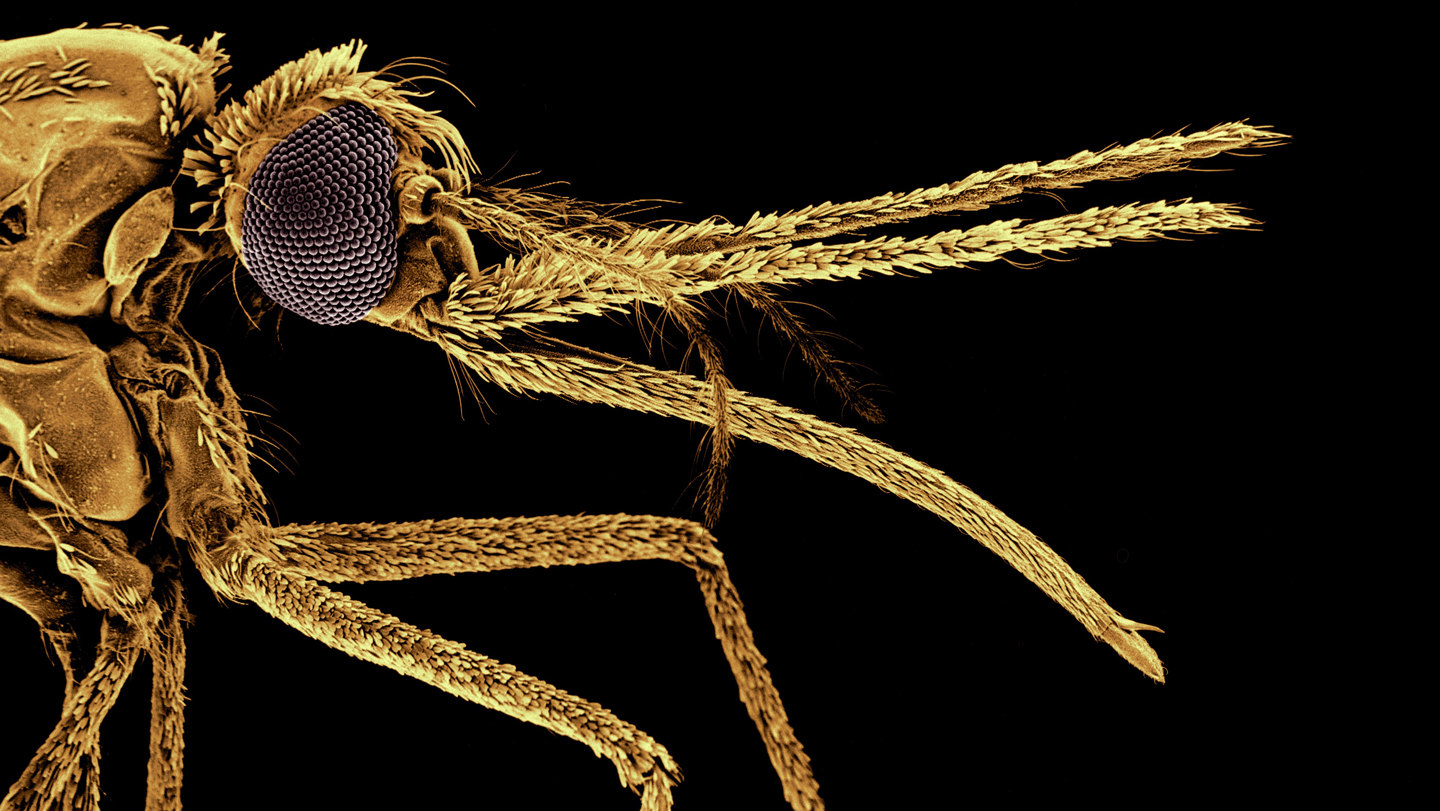
Mosquitoes began biting humans more than a million years ago Skip to content Subscribe today Every print subscription comes with full digital access Subscribe Now Menu All Topics Health Humans Anthropology Health & Medicine Archaeology Psychology View All Life Animals Plants Ecosystems Paleontology Neuroscience Genetics Microbes View All Earth Agriculture Climate Oceans Environment View All Physics Materials Science Quantum Physics Particle Physics View All Space Astronomy Planetary Science Cosmology View All Magazine Menu All Stories Multimedia Reviews Puzzles Collections Educator Portal Century of Science Unsung characters Coronavirus Outbreak Newsletters Investors Lab About SN Explores Our Store SIGN IN Donate Home INDEPENDENT JOURNALISM SINCE 1921 SIGN IN Search Open search Close search Home INDEPENDENT JOURNALISM SINCE 1921 All Topics Earth Agriculture Climate Oceans Environment Humans Anthropology Health & Medicine Archaeology Psychology Life Animals Plants Ecosystems Paleontology Neuroscience Genetics Microbes Physics Materials Science Quantum Physics Particle Physics Space Astronomy Planetary Science Cosmology Tech Computing Artificial Intelligence Chemistry Math Science & Society All Topics Health Humans Humans Anthropology Health & Medicine Archaeology Psychology Recent posts in Humans Health & Medicine Can you trust the results from gut microbiome tests? Maybe not By Tina Hesman Saey6 hours ago Anthropology Mosquitoes began biting humans more than a million years ago By Tom Metcalfe6 hours ago Life An African monkey ate a rope squirrel and came down with mpox By Erin Garcia de JesúsFebruary 24, 2026 Life Life Animals Plants Ecosystems Paleontology Neuroscience Genetics Microbes Recent posts in Life Animals Here’s how honeyeaters and other birds thrive on sugary diets By Bethany Brookshire3 hours ago Anthropology Mosquitoes began biting humans more than a million years ago By Tom Metcalfe6 hours ago Animals Climate change could threaten monarch mass migration By Erin Garcia de JesúsFebruary 25, 2026 Earth Earth Agriculture Climate Oceans Environment Recent posts in Earth Animals Climate change could threaten monarch mass migration By Erin Garcia de JesúsFebruary 25, 2026 Earth Metal pollution from a rocket reentry detected for the first time By Adam MannFebruary 25, 2026 Climate Halting irreversible changes to Antarctica depends on choices made today By Carolyn GramlingFebruary 20, 2026 Physics Physics Materials Science Quantum Physics Particle Physics Recent posts in Physics Physics Here’s why sneakers squeak on the basketball court By Emily ConoverFebruary 25, 2026 Animals Intricate silk helps net-casting spiders ensnare prey in webs By Emily ConoverFebruary 24, 2026 Physics Physicists dream up ‘spacetime quasicrystals’ that could underpin the universe By Emily ConoverFebruary 17, 2026 Space Space Astronomy Planetary Science Cosmology Recent posts in Space Earth Metal pollution from a rocket reentry detected for the first time By Adam MannFebruary 25, 2026 Planetary Science Venus has a massive lava tube By Tom MetcalfeFebruary 23, 2026 Science & Society Project Hail Mary made us wonder how to survive a trip to interstellar space By Tina Hesman SaeyFebruary 20, 2026 News Anthropology Mosquitoes began biting humans more than a million years ago A DNA analysis traced the history of mosquitoes’ initial human bites A close look at mosquito DNA reveals when the insects switched from biting nonhuman primates to our early human ancestors. Peter Finch/Stone/Getty Images By Tom Metcalfe 6 hours ago Share this:Share Share via email (Opens in new window) Email Share on Facebook (Opens in new window) Facebook Share on Reddit (Opens in new window) Reddit Share on X (Opens in new window) X Print (Opens in new window) Print Mosquitoes have been biting people for more than a million years and probably much longer. An analysis of 38 modern mosquitoes’ DNA suggests an ancestral mosquito species developed a preference for feeding on early humans between 2.9 and 1.6 million years ago, researchers write February 26 in Scientific Reports. The team studied 11 mosquito species from the Anopheles leucosphyrus group, chosen because they gave a good overview of the entire group’s genetics. Some species were “anthropophilic” mosquitoes — human feeders — including Anopheles dirus and Anopheles baimaii, both of which spread malaria, while others fed only on nonhuman primates (mostly monkeys) or on both. Sign up for our newsletter We summarize the week's scientific breakthroughs every Thursday. The team used the genetic data to reconstruct the insects’ evolutionary history from the mutation rates in their genes. That let the researchers estimate when mosquitoes first bit humans and where — a submerged landmass called Sundaland, the remnants of which are now the Malay Peninsula, Borneo, Sumatra and Java. The leucosphyrus group was the first to adapt to bite humans, while other types of mosquitoes acquired this preference only in the last 10,000 years. “We were not expecting this group to have originated so long ago,” says evolutionary biologist Catherine Walton of the University of Manchester in England. “The most parsimonious explanation is that it was in response to these early hominins arriving.” Before humans arrived, the mosquitoes had fed exclusively on the blood of nonhuman primates in the rainforest canopy. This was the insects’ “ancestral behavior,” and previous studies indicate biting nonhuman primates began more than 3.6 million years ago. Archaeologists still debate when the first human ancestors from Africa spread into Asia. But the new study of mosquito genetics independently suggests that the movement happened around 1.8 million years ago, and it matches a recent study that dates the oldest Homo erectus skulls in China to about the same time. H. erectus must have lived in Southeast Asia in large numbers to drive the mosquitoes’ biting adaptation, which seems to have been based on the early human’s unique odor. “You need an abundance of Homo erectus to really get an evolutionary change taking place,” Walton says. And while only about 100 of the estimated 3,600 modern mosquito species have evolved to bite humans, the insects have been ruining quiet evenings ever since. Questions or comments on this article? E-mail us at feedback@sciencenews.org | Reprints FAQ Citations U.S. Singh et al. Early hominin arrival in Southeast Asia triggered the evolution of major human malaria vectors. Scientific Reports 2026, 16:6973. Published online February 26, 2026. doi: 10.1038/s41598-026-35456-y. H. Tu et al. The oldest in situ Homo erectus crania in eastern Asia: The Yunxian site dates to ~1.77 Ma. Science Advances Vol. 12 No. 8. Published online February 18, 2026. doi: 10.1126/sciadv.ady2270. We are at a critical time and supporting science journalism is more important than ever. Science News a
Mosquitoes began biting humans more than a million years ago