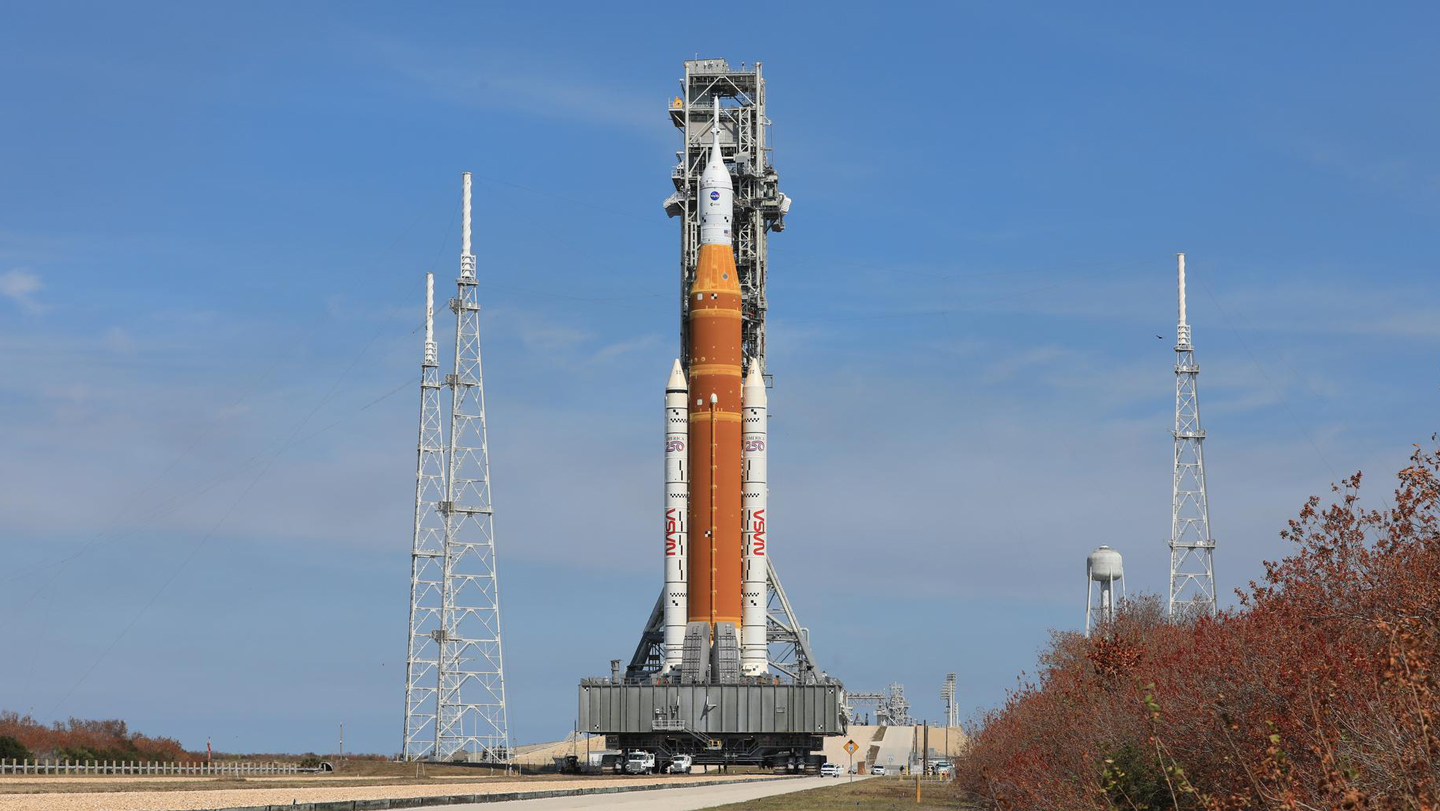
NASA scraps its 2027 moon landing, adds two missions in 2028 Skip to content Subscribe today Every print subscription comes with full digital access Subscribe Now Menu All Topics Health Humans Anthropology Health & Medicine Archaeology Psychology View All Life Animals Plants Ecosystems Paleontology Neuroscience Genetics Microbes View All Earth Agriculture Climate Oceans Environment View All Physics Materials Science Quantum Physics Particle Physics View All Space Astronomy Planetary Science Cosmology View All Magazine Menu All Stories Multimedia Reviews Puzzles Collections Educator Portal Century of Science Unsung characters Coronavirus Outbreak Newsletters Investors Lab About SN Explores Our Store SIGN IN Donate Home INDEPENDENT JOURNALISM SINCE 1921 SIGN IN Search Open search Close search Home INDEPENDENT JOURNALISM SINCE 1921 All Topics Earth Agriculture Climate Oceans Environment Humans Anthropology Health & Medicine Archaeology Psychology Life Animals Plants Ecosystems Paleontology Neuroscience Genetics Microbes Physics Materials Science Quantum Physics Particle Physics Space Astronomy Planetary Science Cosmology Tech Computing Artificial Intelligence Chemistry Math Science & Society All Topics Health Humans Humans Anthropology Health & Medicine Archaeology Psychology Recent posts in Humans Neuroscience Why is math harder for some kids? Brain scans offer clues By Lily Burton8 hours ago Health & Medicine Can you trust the results from gut microbiome tests? Maybe not By Tina Hesman SaeyFebruary 26, 2026 Anthropology Mosquitoes began biting humans more than a million years ago By Tom MetcalfeFebruary 26, 2026 Life Life Animals Plants Ecosystems Paleontology Neuroscience Genetics Microbes Recent posts in Life Neuroscience Why is math harder for some kids? Brain scans offer clues By Lily Burton8 hours ago Animals Here’s how honeyeaters and other birds thrive on sugary diets By Bethany BrookshireFebruary 26, 2026 Anthropology Mosquitoes began biting humans more than a million years ago By Tom MetcalfeFebruary 26, 2026 Earth Earth Agriculture Climate Oceans Environment Recent posts in Earth Climate Take it from the Olympics, slushy winter sports may be the new normal By Natasha Vizcarra6 hours ago Animals Climate change could threaten monarch mass migration By Erin Garcia de JesúsFebruary 25, 2026 Earth Metal pollution from a rocket reentry detected for the first time By Adam MannFebruary 25, 2026 Physics Physics Materials Science Quantum Physics Particle Physics Recent posts in Physics Physics Here’s why sneakers squeak on the basketball court By Emily ConoverFebruary 25, 2026 Animals Intricate silk helps net-casting spiders ensnare prey in webs By Emily ConoverFebruary 24, 2026 Physics Physicists dream up ‘spacetime quasicrystals’ that could underpin the universe By Emily ConoverFebruary 17, 2026 Space Space Astronomy Planetary Science Cosmology Recent posts in Space Space NASA scraps its 2027 moon landing, adds two missions in 2028 By Lisa Grossman5 hours ago Science & Society On moonshots and Minneapolis By Lisa Grossman10 hours ago Earth Metal pollution from a rocket reentry detected for the first time By Adam MannFebruary 25, 2026 News Space NASA scraps its 2027 moon landing, adds two missions in 2028 The agency just announced major changes to the Artemis program NASA’s Artemis II Space Launch System rocket rolled back into a building at Kennedy Space Center in Florida for repairs on February 25. The rocket is supposed to launch astronauts to the moon for the first time since 1972 but has suffered delays due to fuel leaks. Kim Shiflett/NASA By Lisa Grossman 5 hours ago Share this:Share Share via email (Opens in new window) Email Share on Facebook (Opens in new window) Facebook Share on Reddit (Opens in new window) Reddit Share on X (Opens in new window) X Print (Opens in new window) Print NASA’s path to the moon is taking a detour. The Artemis III mission, scheduled for 2027, will no longer land on the moon as originally planned, NASA administrator Jared Isaacman announced February 27 in a news conference. Instead, the agency aims to attempt two lunar landings in 2028. “Everyone agrees this is the only way forward,” Isaacman said. “This is how NASA changed the world, and this is how NASA is going to do it again.” Sign up for our newsletter We summarize the week's scientific breakthroughs every Thursday. The announcement comes as the Artemis II mission, which will send astronauts around the moon for the first time since 1972, is facing a series of delays. After two dress rehearsals in February revealed leaks and other issues with the fueling system for the Space Launch System rocket, NASA rolled it back into the Vehicle Assembly Building at Kennedy Space Center in Florida for repairs on February 25. Artemis II originally targeted a launch as early as February 6 but now aims for no sooner than April 1, said associate administrator Lori Glaze. To make that date, the rocket will need to return to the launch pad by about March 21. In 2022, Artemis I launched an uncrewed capsule around the moon after facing similar fuel leaks. After Artemis II’s flyby, the plan was for the Artemis III mission to land astronauts on the moon in 2027, even though the landers and spacesuits aren’t ready yet. Letting three years elapse between launches is “not a pathway to success,” Isaacman said, nor is going directly from a lunar flyby to a landing without testing intermediate steps. Instead, Artemis III will not land on the moon. That mission will still launch in 2027, but it will rendezvous in low Earth orbit with one or both commercially built landers under development by SpaceX and Blue Origin. The astronauts will also test out their space suits, designed by Houston-based company Axiom Space. Artemis III will set the stage for two potential landing attempts in 2028 for Artemis IV and V. “We’re not committing to launching both, but we want to have the opportunity to do that,” Isaacman said. NASA also scrapped plans to upgrade its SLS rocket between Artemis II and III. “I’m breathing a sigh of relief,” says Jack Kiraly, director of government relations for the Planetary Society, headquartered in Pasadena, Calif. Combined with an upcoming Senate vote on the 2026 NASA Reauthorization Act — which makes specific recommendations about what landings should do — and other developments, Kiraly sees this announcement as helping to pull NASA’s focus back to scientific and engineering challenges rather than political and budgetary ones. “The technical problems abound at this point,” Kiraly says. “But better to have the technical problems, because those can be solved. It’s politics and bureaucracy that get in the way of those things.” The ultimate goal, Isaacman said, is to launch missions to the moon more frequently and build a long-term base there. He hopes the missions spark renewed interest in human space explor
NASA scraps its 2027 moon landing, adds two missions in 2028