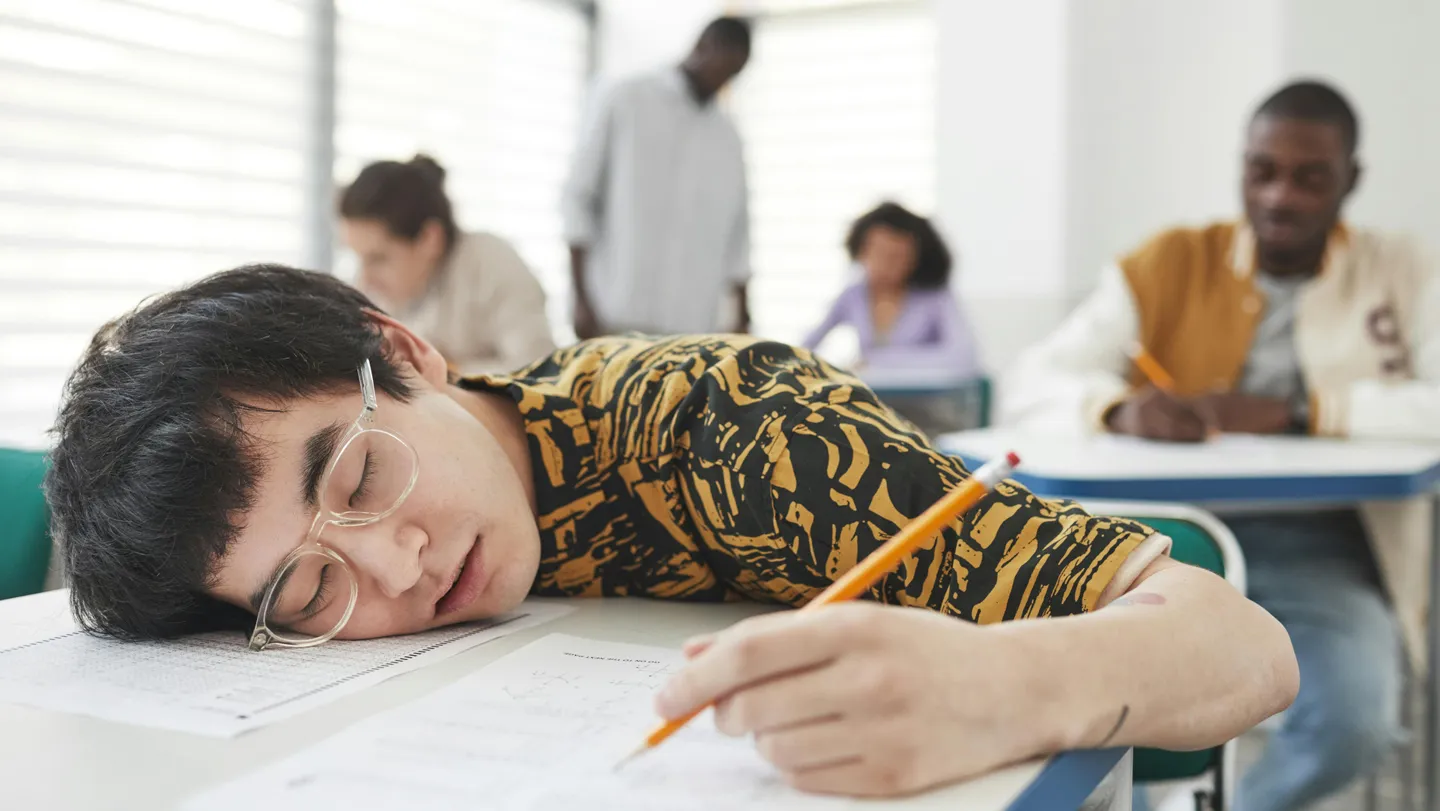
A rising percentage of U.S. teens aren’t getting enough sleep Skip to content Subscribe today Every print subscription comes with full digital access Subscribe Now Menu All Topics Health Humans Anthropology Health & Medicine Archaeology Psychology View All Life Animals Plants Ecosystems Paleontology Neuroscience Genetics Microbes View All Earth Agriculture Climate Oceans Environment View All Physics Materials Science Quantum Physics Particle Physics View All Space Astronomy Planetary Science Cosmology View All Magazine Menu All Stories Multimedia Reviews Puzzles Collections Educator Portal Century of Science Unsung characters Coronavirus Outbreak Newsletters Investors Lab About SN Explores Our Store SIGN IN Donate Home INDEPENDENT JOURNALISM SINCE 1921 SIGN IN Search Open search Close search Home INDEPENDENT JOURNALISM SINCE 1921 All Topics Earth Agriculture Climate Oceans Environment Humans Anthropology Health & Medicine Archaeology Psychology Life Animals Plants Ecosystems Paleontology Neuroscience Genetics Microbes Physics Materials Science Quantum Physics Particle Physics Space Astronomy Planetary Science Cosmology Tech Computing Artificial Intelligence Chemistry Math Science & Society All Topics Health Humans Humans Anthropology Health & Medicine Archaeology Psychology Recent posts in Humans Health & Medicine Simulations of your gut may predict which probiotics will stick By Nora Bradford10 hours ago Health & Medicine A rising percentage of U.S. teens aren’t getting enough sleep By Aimee Cunningham12 hours ago Anthropology The ancient human ancestor ‘Little Foot’ gets a new face By Jay Bennett14 hours ago Life Life Animals Plants Ecosystems Paleontology Neuroscience Genetics Microbes Recent posts in Life Anthropology The ancient human ancestor ‘Little Foot’ gets a new face By Jay Bennett14 hours ago Neuroscience Why is math harder for some kids? Brain scans offer clues By Lily BurtonFebruary 27, 2026 Animals Here’s how honeyeaters and other birds thrive on sugary diets By Bethany BrookshireFebruary 26, 2026 Earth Earth Agriculture Climate Oceans Environment Recent posts in Earth Climate Take it from the Olympics, slushy winter sports may be the new normal By Natasha VizcarraFebruary 27, 2026 Animals Climate change could threaten monarch mass migration By Erin Garcia de JesúsFebruary 25, 2026 Earth Metal pollution from a rocket reentry detected for the first time By Adam MannFebruary 25, 2026 Physics Physics Materials Science Quantum Physics Particle Physics Recent posts in Physics Physics Here’s why sneakers squeak on the basketball court By Emily ConoverFebruary 25, 2026 Animals Intricate silk helps net-casting spiders ensnare prey in webs By Emily ConoverFebruary 24, 2026 Physics Physicists dream up ‘spacetime quasicrystals’ that could underpin the universe By Emily ConoverFebruary 17, 2026 Space Space Astronomy Planetary Science Cosmology Recent posts in Space Space NASA scraps its 2027 moon landing, adds two missions in 2028 By Lisa GrossmanFebruary 27, 2026 Science & Society On moonshots and Minneapolis By Lisa GrossmanFebruary 27, 2026 Earth Metal pollution from a rocket reentry detected for the first time By Adam MannFebruary 25, 2026 News Health & Medicine A rising percentage of U.S. teens aren’t getting enough sleep A national survey found 77 percent of high school students didn’t get adequate shut-eye in 2023 A large majority of U.S. high school students get less than the recommended amount of sleep each night, according to a national survey. Andy Barbour/Pexels By Aimee Cunningham 12 hours ago Share this:Share Share via email (Opens in new window) Email Share on Facebook (Opens in new window) Facebook Share on Reddit (Opens in new window) Reddit Share on X (Opens in new window) X Print (Opens in new window) Print The percentage of U.S. high school students who aren’t getting enough shut-eye is climbing. U.S. medical societies recommend that teens sleep eight to 10 hours each night. But in 2023, 77 percent of high school students reported slumbering fewer hours than that, up from 69 percent of those surveyed in 2007. The overall rise was due to a jump in those reporting five hours of sleep or less, researchers report March 2 in the Journal of the American Medical Association. Sign up for our newsletter We summarize the week's scientific breakthroughs every Thursday. The study analyzed data from the Youth Risk Behavior Study, a long-term, national survey of students in public and private high schools. Seven hours of sleep or less describes insufficient sleep, while five hours or less counts as very short sleep. The percentage of students reporting insufficient sleep remained about the same from 2007 to 2023. But the percentage of very short sleepers rose from 16 to 23 percent. Narrowing in on different demographic groups, there were larger climbs among Black students compared with white students, but all groups saw increased percentages of those getting inadequate sleep. A slew of behavioral health risk factors, including mental health issues and substance abuse, can make it difficult to get enough sleep. Nearly all the groups at higher risk reported higher percentages of too little sleep. But the rise among students who weren’t at risk equaled or surpassed those of students with risk factors. This broad trend of fewer z’s suggests the culprit is larger structural problems rather than individual issues, the research team notes. One example is early high school start times. Around the time puberty starts, there is a big shift in sleep-wake cycles for most teens. It leads to a delay of as much as two hours in falling asleep and in waking up, compared with their cycles in past years. This delay is thought to be due in part to timing changes in the release of the sleep-wake cycle hormone melatonin. It means most teens have a hard time falling asleep before 11 p.m. or waking up before 8 a.m. Inadequate sleep affects teens’ ability to think and increases the risk of physical and mental health harms. Research has shown that later high school start times benefit students. A study of five Minnesota high schools followed students over about two years as two schools delayed their first bell by an hour or so and three kept theirs at 7:30 a.m. The students with a later start got more sleep and had fewer symptoms of depression than their peers with an early start. Questions or comments on this article? E-mail us at feedback@sciencenews.org | Reprints FAQ Citations T.J. Bommersbach, M. Olfson and T.G. Rhee. Insufficient sleep among U.S. adolescents across behavioral risk groups. Journal of the American Medical Association. Published online March 2, 2026. doi:10.1001/jama.2026.1417. E. Sadikova et al. Delaying high school start times impacts depressed mood among students: evidence from a natural experiment. Social Psychiatry and Psychiatric Epidemiology. Vol. 59, June 7, 2024, p. 2073. doi:10.1
A rising percentage of U.S. teens aren’t getting enough sleep