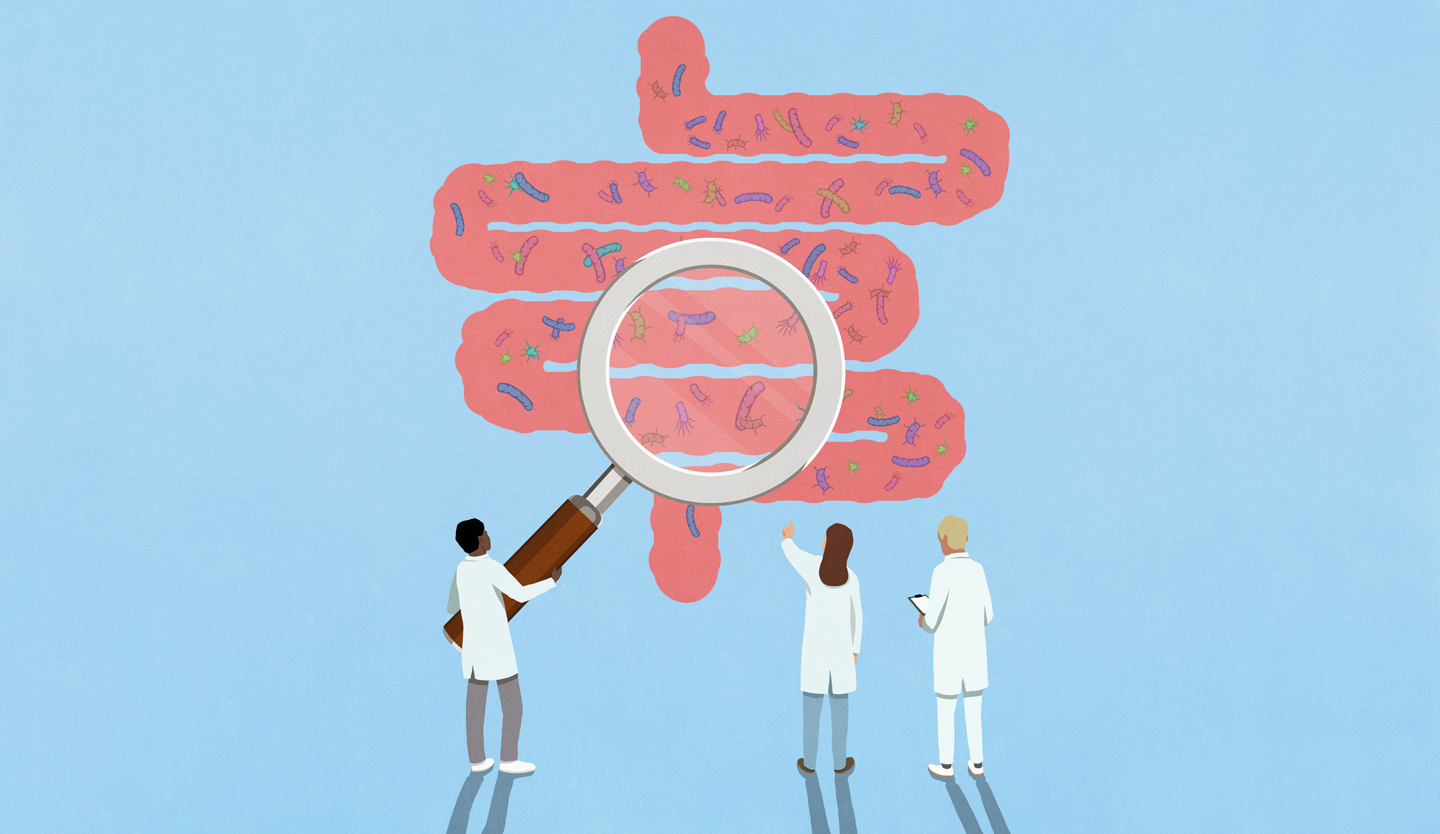
Simulations of your gut may predict which probiotics will stick Skip to content Subscribe today Every print subscription comes with full digital access Subscribe Now Menu All Topics Health Humans Anthropology Health & Medicine Archaeology Psychology View All Life Animals Plants Ecosystems Paleontology Neuroscience Genetics Microbes View All Earth Agriculture Climate Oceans Environment View All Physics Materials Science Quantum Physics Particle Physics View All Space Astronomy Planetary Science Cosmology View All Magazine Menu All Stories Multimedia Reviews Puzzles Collections Educator Portal Century of Science Unsung characters Coronavirus Outbreak Newsletters Investors Lab About SN Explores Our Store SIGN IN Donate Home INDEPENDENT JOURNALISM SINCE 1921 SIGN IN Search Open search Close search Home INDEPENDENT JOURNALISM SINCE 1921 All Topics Earth Agriculture Climate Oceans Environment Humans Anthropology Health & Medicine Archaeology Psychology Life Animals Plants Ecosystems Paleontology Neuroscience Genetics Microbes Physics Materials Science Quantum Physics Particle Physics Space Astronomy Planetary Science Cosmology Tech Computing Artificial Intelligence Chemistry Math Science & Society All Topics Health Humans Humans Anthropology Health & Medicine Archaeology Psychology Recent posts in Humans Health & Medicine Simulations of your gut may predict which probiotics will stick By Nora Bradford10 hours ago Health & Medicine A rising percentage of U.S. teens aren’t getting enough sleep By Aimee Cunningham12 hours ago Anthropology The ancient human ancestor ‘Little Foot’ gets a new face By Jay Bennett14 hours ago Life Life Animals Plants Ecosystems Paleontology Neuroscience Genetics Microbes Recent posts in Life Anthropology The ancient human ancestor ‘Little Foot’ gets a new face By Jay Bennett14 hours ago Neuroscience Why is math harder for some kids? Brain scans offer clues By Lily BurtonFebruary 27, 2026 Animals Here’s how honeyeaters and other birds thrive on sugary diets By Bethany BrookshireFebruary 26, 2026 Earth Earth Agriculture Climate Oceans Environment Recent posts in Earth Climate Take it from the Olympics, slushy winter sports may be the new normal By Natasha VizcarraFebruary 27, 2026 Animals Climate change could threaten monarch mass migration By Erin Garcia de JesúsFebruary 25, 2026 Earth Metal pollution from a rocket reentry detected for the first time By Adam MannFebruary 25, 2026 Physics Physics Materials Science Quantum Physics Particle Physics Recent posts in Physics Physics Here’s why sneakers squeak on the basketball court By Emily ConoverFebruary 25, 2026 Animals Intricate silk helps net-casting spiders ensnare prey in webs By Emily ConoverFebruary 24, 2026 Physics Physicists dream up ‘spacetime quasicrystals’ that could underpin the universe By Emily ConoverFebruary 17, 2026 Space Space Astronomy Planetary Science Cosmology Recent posts in Space Space NASA scraps its 2027 moon landing, adds two missions in 2028 By Lisa GrossmanFebruary 27, 2026 Science & Society On moonshots and Minneapolis By Lisa GrossmanFebruary 27, 2026 Earth Metal pollution from a rocket reentry detected for the first time By Adam MannFebruary 25, 2026 News Health & Medicine Simulations of your gut may predict which probiotics will stick Tests of “digital gut” simulations hint at personalized probiotics but not a cure‑all yet What counts as “good” bacteria depends on the individual and the environment. Malte Mueller/Getty Images By Nora Bradford 10 hours ago Share this:Share Share via email (Opens in new window) Email Share on Facebook (Opens in new window) Facebook Share on Reddit (Opens in new window) Reddit Share on X (Opens in new window) X Print (Opens in new window) Print Figuring out which bacteria or other nutrients your gut needs may one day be as simple as running detailed computer simulations. From pills to yogurts to sodas, probiotics are being repackaged and marketed to us more and more, with the promise of boosting our “gut health.” But while commercially available probiotics work for some people, this one-size-fits-all approach hasn’t reliably benefited consumers. Instead, new simulations can predict whether a specific bacterial strain will successfully take up residence in a person’s gut, researchers report February 19 in PLOS Biology. Sign up for our newsletter We summarize the week's scientific breakthroughs every Thursday. The simulations, called microbial community–scale metabolic models, are built on what scientists already know about how gut bacteria eat and use food. They allow researchers to simulate what would happen if a strain of bacteria were inserted into an individual’s gut, “and see whether or not it can grow, [and] what it does if it does grow,” says Sean Gibbons, a microbiome researcher at the Institute for Systems Biology in Seattle. “We thought that this type of modeling platform could potentially allow us to identify personalized responses and maybe even design personalized interventions.” Gibbons and his colleagues used existing data from two intervention studies to test a new microbial community–scale metabolic model. The first tested the benefit of a synbiotic — a mix of probiotics, which are live gut bacteria, and prebiotic fiber, which triggers bacteria growth — for patients with type 2 diabetes. The second model tested a pharmaceutical‑grade live biotherapeutic in patients with recurrent Clostridioides difficile infections. In both datasets, the added bacterial strains showed promising health outcomes for some individuals and not others, so Gibbons and his team wanted to see if they could use the models to understand why. The team used patients’ baseline gut microbiome profiles before the intervention and predicted with 75 to 80 percent accuracy which bacteria would stick, or engraft. The model also accurately predicted many of the boosts in the production of short-chain fatty acids thought to support a healthy gut. “I was actually surprised that the engraftment could be predicted so accurately in such a complex context,” says Christoph Kaleta, a systems biologist at Kiel University in Germany, who was not involved in the study. However, Kaleta notes that the study looked only at short-term changes. “While probiotics often show a short-term presence of the provided species, long-term engraftment is only seldom observed.… Ideally, you would like those probiotic species to maintain their beneficial effect for longer.” Gibbons and his team also looked at the health outcomes of specific bacteria’s growth. They found that higher growth rates of Akkermansia muciniphila were linked with better blood sugar control after a meal. To validate their model in a cohort of healthy people, the team also used data from people who had shifted to high-fiber diets. Even in these individuals, the model accurately predicted how their gu
Simulations of your gut may predict which probiotics will stick