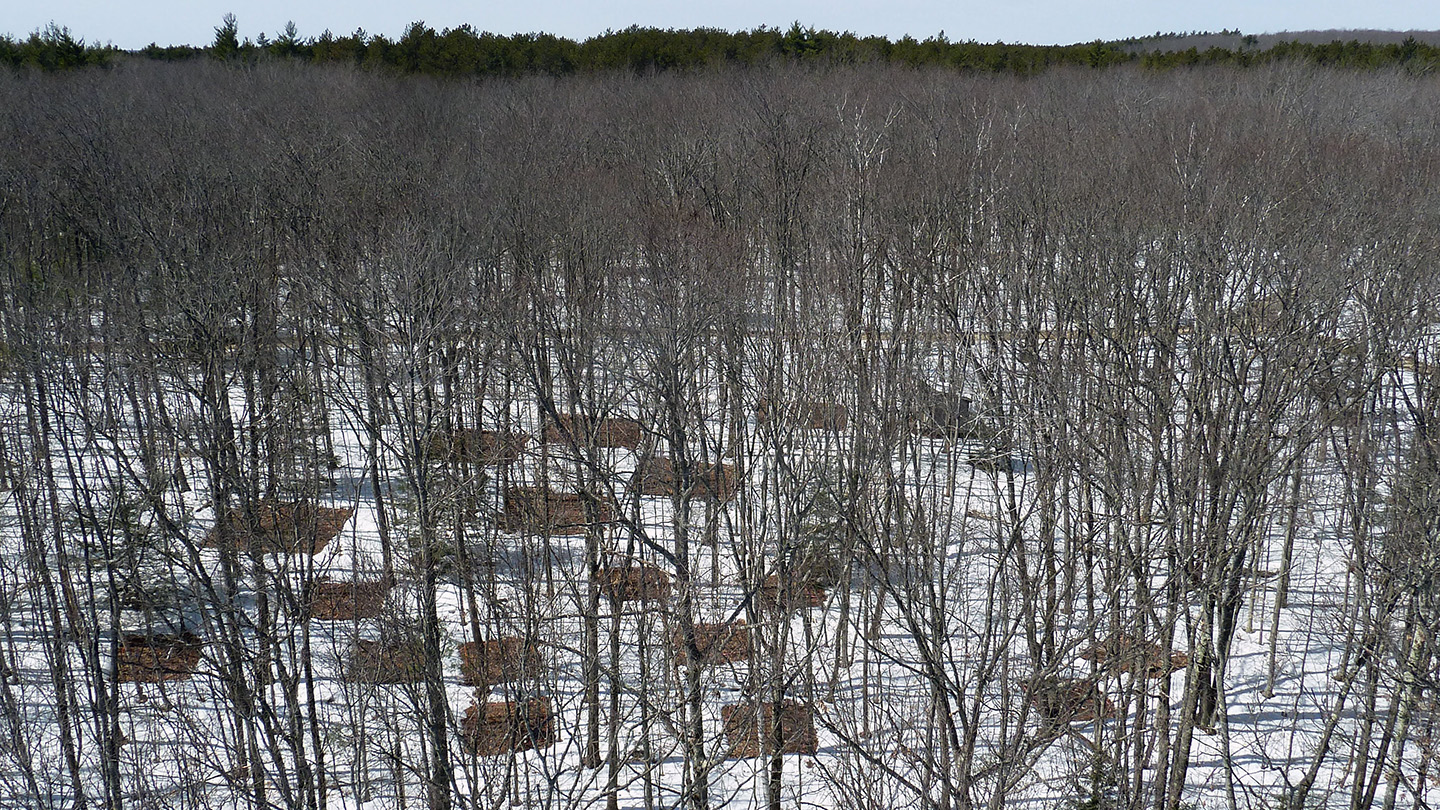
Climate change is affecting microbes. It could have implications for all life on Earth Skip to content Subscribe today Every print subscription comes with full digital access Subscribe Now Menu All Topics Health Humans Anthropology Health & Medicine Archaeology Psychology View All Life Animals Plants Ecosystems Paleontology Neuroscience Genetics Microbes View All Earth Agriculture Climate Oceans Environment View All Physics Materials Science Quantum Physics Particle Physics View All Space Astronomy Planetary Science Cosmology View All Magazine Menu All Stories Multimedia Reviews Puzzles Collections Educator Portal Century of Science Unsung characters Coronavirus Outbreak Newsletters Investors Lab About SN Explores Our Store SIGN IN Donate Home INDEPENDENT JOURNALISM SINCE 1921 SIGN IN Search Open search Close search Home INDEPENDENT JOURNALISM SINCE 1921 All Topics Earth Agriculture Climate Oceans Environment Humans Anthropology Health & Medicine Archaeology Psychology Life Animals Plants Ecosystems Paleontology Neuroscience Genetics Microbes Physics Materials Science Quantum Physics Particle Physics Space Astronomy Planetary Science Cosmology Tech Computing Artificial Intelligence Chemistry Math Science & Society All Topics Health Humans Humans Anthropology Health & Medicine Archaeology Psychology Recent posts in Humans Health & Medicine Are pig organs the future of transplantation? By Meghan RosenMarch 17, 2026 Health & Medicine Smartwatch data can be used to assess early diabetes risk By Elie DolginMarch 16, 2026 Climate Extreme heat is cutting the time people can safely be active outdoors By Nikk OgasaMarch 16, 2026 Life Life Animals Plants Ecosystems Paleontology Neuroscience Genetics Microbes Recent posts in Life Microbes How warming is shifting microbial worlds By Erin Garcia de Jesús1 hour ago Animals Sharks are ingesting drugs in the Bahamas By Joshua Rapp LearnMarch 18, 2026 Animals Platypus fur has a surprising feature seen only in bird feathers By Jude ColemanMarch 17, 2026 Earth Earth Agriculture Climate Oceans Environment Recent posts in Earth Microbes How warming is shifting microbial worlds By Erin Garcia de Jesús1 hour ago Earth To make a ‘Snowball Earth,’ sci-fi moves fast. Geology is far slower By Carolyn Gramling24 hours ago Climate City skylines influence cloud formation above them By Larissa G. CapellaMarch 17, 2026 Physics Physics Materials Science Quantum Physics Particle Physics Recent posts in Physics Physics A static electricity mystery comes to the surface By Emily Conover22 hours ago Plants Tree tops sparkle with electricity during thunderstorms By Lily BurtonMarch 10, 2026 Physics When the pressure’s off, this superconductor appears to break records By Emily ConoverMarch 9, 2026 Space Space Astronomy Planetary Science Cosmology Recent posts in Space Space One possible recipe for life on Titan is a bust By Tina Hesman SaeyMarch 11, 2026 Astronomy A strange ‘chirp’ in a brilliant stellar blast points to a magnetar By Jay BennettMarch 11, 2026 Planetary Science NASA’s DART spacecraft changed an asteroid’s orbit around the sun By Lisa GrossmanMarch 6, 2026 Microbes How warming is shifting microbial worlds Climate change is affecting microbes, and that has implications for all life on Earth At the Prospect Hill field site in Harvard Forest, an experiment that imitates the effects of climate change on soil has been running for 35 years. Courtesy of Audrey Barker Plotkin By Erin Garcia de Jesús 1 hour ago Share this:Share Share via email (Opens in new window) Email Share on Facebook (Opens in new window) Facebook Share on Reddit (Opens in new window) Reddit Share on X (Opens in new window) X Print (Opens in new window) Print At first glance, Harvard Forest seems like an ordinary woodland. Oak trees shade the terrain among small shrubs and other trees, mostly maple, birch and beech. Fallen leaves coat the ground below. What makes this 1,600-hectare patch of land in north central Massachusetts special is buried in the soil. Some 10 centimeters below, scientists have installed a subterranean network of wires — some of which have been active for about 35 years — that warms the forest floor. By continuously heating the soil 5 degrees Celsius above ambient soil temperature, these wires imitate the warming effects of climate change for researchers who want to understand what a hotter world might mean for the surrounding ecosystem. Sign up for our newsletter We summarize the week's scientific breakthroughs every Thursday. Ecologist Serita Frey of the University of New Hampshire in Durham has certainly noticed changes since she started working at Harvard Forest in 2003. These days, more rain and less snow falls in winter. Summers are drier than they used to be. More trees are falling victim to disease, and some invasive species are moving in. But what is less noticeable — and what she’s keen to learn — is what’s happening to the bacteria, fungi and other microbes that make their homes in the dirt below the forest floor. Microbes, like all life on Earth, are facing a warming climate. With underground wires artificially warming the soil, Frey and her team can collect soil samples to monitor how microorganisms that make their homes in Harvard Forest’s soil are faring. They’ve learned, for instance, that two decades of warming have altered populations of bacteria inhabiting the topsoil of heated plots, as well as the makeup of the microbial community found in clumps of soil. Overall, human-driven climate change is “shifting the composition of the community in terms of who’s there,” Frey says. “But we’re also shifting its function.” Scientists have long known that microbes play a crucial role in maintaining the levels of carbon and other nutrients in our environment. As microbes break down dead animal and plant matter, these organisms can both absorb and produce climate-altering gases, including carbon dioxide, methane and nitrous oxide. In a warming world, that cycle could start to look different, with serious consequences for other life on the planet. Frey is among many researchers working to understand how climate change will affect microbes — and if humans can harness them to reduce its impacts. Carbon on the move C. Chang, Rudzhan Nagiev/iStock/Getty Images Plus Carbon moves continuously through soils, waterways, organisms and the atmosphere in a process called the carbon cycle. Carbon dioxide enters the atmosphere from respiring plants (B, E) and animals (C), as well as through human activities (A). As microbes break down dead organisms in soil or water (D), they push carbon into underground stores (F) or the deep ocean. But, similar to animals and plants, microbes can also release carbon into the atmosphere as a by-product of making energy. Sponsor Message Like with the soil work, research elsewhere is revealing that viruses and other microbes in thawing permafrost may add more
How warming is shifting microbial worlds