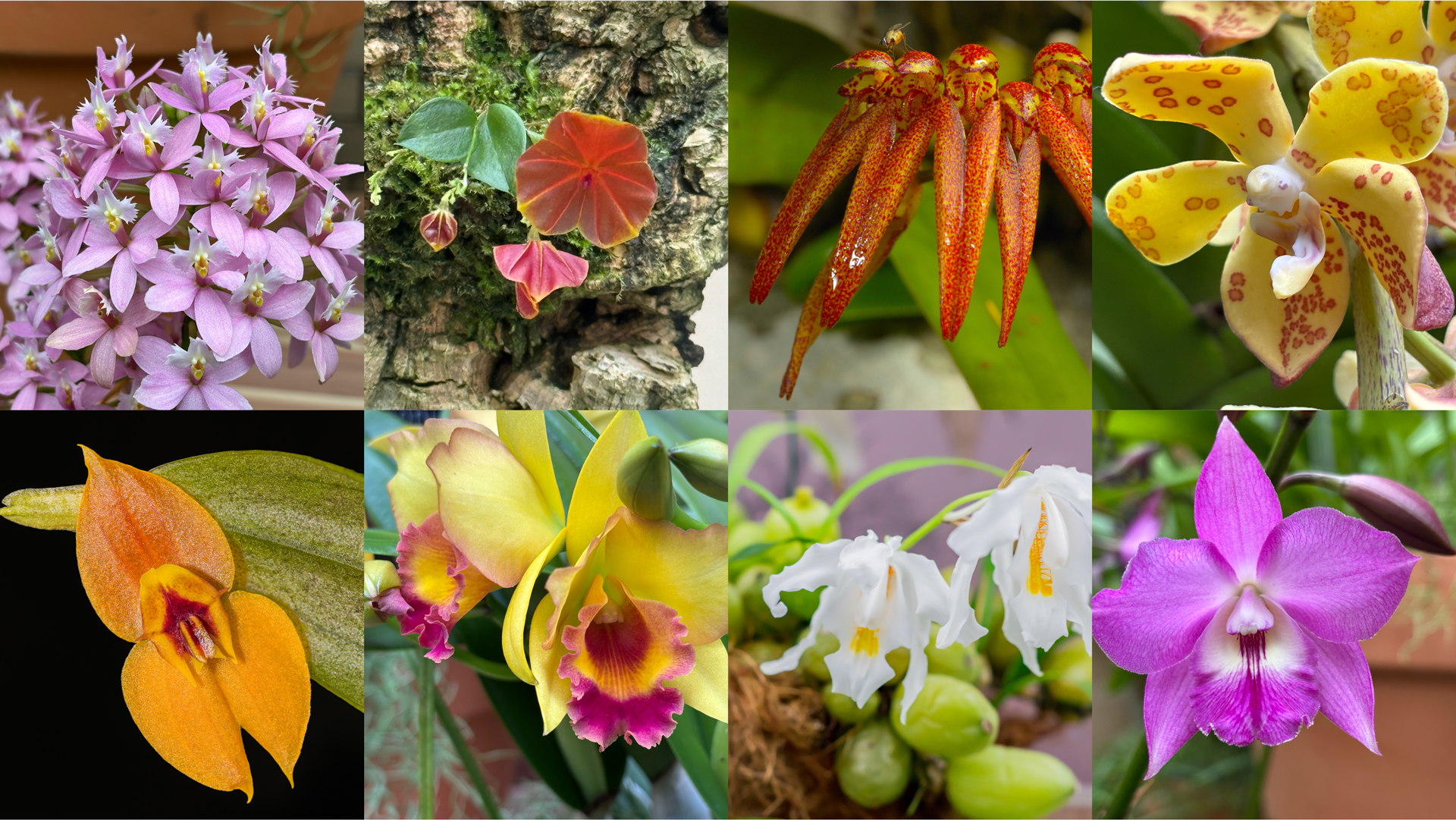
Check out 6 ways orchids use tricks to reproduce Skip to content Subscribe today Every print subscription comes with full digital access Subscribe Now Menu All Topics Health Humans Anthropology Health & Medicine Archaeology Psychology View All Life Animals Plants Ecosystems Paleontology Neuroscience Genetics Microbes View All Earth Agriculture Climate Oceans Environment View All Physics Materials Science Quantum Physics Particle Physics View All Space Astronomy Planetary Science Cosmology View All Magazine Menu All Stories Multimedia Reviews Puzzles Collections Educator Portal Century of Science Unsung characters Coronavirus Outbreak Newsletters Investors Lab About SN Explores Our Store SIGN IN Donate Home INDEPENDENT JOURNALISM SINCE 1921 SIGN IN Search Open search Close search Home INDEPENDENT JOURNALISM SINCE 1921 All Topics Earth Agriculture Climate Oceans Environment Humans Anthropology Health & Medicine Archaeology Psychology Life Animals Plants Ecosystems Paleontology Neuroscience Genetics Microbes Physics Materials Science Quantum Physics Particle Physics Space Astronomy Planetary Science Cosmology Tech Computing Artificial Intelligence Chemistry Math Science & Society All Topics Health Humans Humans Anthropology Health & Medicine Archaeology Psychology Recent posts in Humans Health & Medicine GLP-1 microdosers are chasing longevity By Jamie Ducharme4 hours ago Archaeology A new study questions when people first reached South America By Tom Metcalfe24 hours ago Health & Medicine Are pig organs the future of transplantation? By Meghan RosenMarch 17, 2026 Life Life Animals Plants Ecosystems Paleontology Neuroscience Genetics Microbes Recent posts in Life Plants Check out 6 ways orchids use tricks to reproduce By Mandana Tadayon1 hour ago Animals Mosquitoes get the ‘I’m full’ signal from their butts, not their brains By Jake Buehler3 hours ago Microbes How warming is shifting microbial worlds By Erin Garcia de JesúsMarch 19, 2026 Earth Earth Agriculture Climate Oceans Environment Recent posts in Earth Earth Earth’s continental plates were moving 3.48 billion years ago By Douglas Fox24 hours ago Microbes How warming is shifting microbial worlds By Erin Garcia de JesúsMarch 19, 2026 Earth To make a ‘Snowball Earth,’ sci-fi moves fast. Geology is far slower By Carolyn GramlingMarch 18, 2026 Physics Physics Materials Science Quantum Physics Particle Physics Recent posts in Physics Physics A static electricity mystery comes to the surface By Emily ConoverMarch 18, 2026 Plants Tree tops sparkle with electricity during thunderstorms By Lily BurtonMarch 10, 2026 Physics When the pressure’s off, this superconductor appears to break records By Emily ConoverMarch 9, 2026 Space Space Astronomy Planetary Science Cosmology Recent posts in Space Space One possible recipe for life on Titan is a bust By Tina Hesman SaeyMarch 11, 2026 Astronomy A strange ‘chirp’ in a brilliant stellar blast points to a magnetar By Jay BennettMarch 11, 2026 Planetary Science NASA’s DART spacecraft changed an asteroid’s orbit around the sun By Lisa GrossmanMarch 6, 2026 Plants Check out 6 ways orchids use tricks to reproduce From funky smells to crafty colors, orchids have some weird ways of attracting pollinators Play the video Play By Mandana Tadayon 1 hour ago Share this:Share Share via email (Opens in new window) Email Share on Facebook (Opens in new window) Facebook Share on Reddit (Opens in new window) Reddit Share on X (Opens in new window) X Print (Opens in new window) Print Orchids don’t always reward their pollinators — sometimes they mislead them. From flowers that mimic insect mates to blooms that smell like rotting fish, orchids have evolved remarkable strategies to ensure their reproductive success. Experts at the U.S. Botanic Garden in Washington, D.C., explain how these botanical deceivers work and why, despite their impressive bag of tricks, many orchid species are currently considered endangered. Transcript Mandana Tadayon: Orchids are among the largest plant families on Earth — often trading the top spot with daisies as new species get discovered. George Guenther, Advanced Gardener, U. S. Botanic Garden: Orchids are incredibly diverse. There are many thousands of species around the world. They’ve evolved into many different forms and growth habits and flowers and things like that, to facilitate pollination and to adapt to their environments. Tadayon: Dubbed ‘masters of deception’ by the experts at the U.S. Botanic Garden in Washington, D.C., the orchids you’re about to see each have a unique trick to lure in pollinators. #1 Lepanthes, Pollination mechanism: Sexual deception Guenther: So this case features orchids that are pollinated through sexual deception. Specifically, the plants that we have on display right now are species of Lepanthes. Some species of Lepanthes have been observed to be pollinated through pseudocopulation, which means that in many cases, a male fungus gnat — small gnat, visits the flower, thinking it’s a mate. And in doing so, then transfers the pollen when it interacts directly with the reproductive structures of the flower. #2 Phragmipedium Pearcei, Pollination mechanism: False trap deception Guenther: Contrary to popular conception, the pouches on the flowers are not actually traps to consume or catch insects permanently, but they actually serve as part of their pollination mechanism. They are oftentimes pollinated by insects that visit the flowers, fall into the pouches like a trap, and are unable to fly back out of the pouches. And so what they have to do is crawl out the back of the flower. And in doing so, they deposit pollen and then pick up pollen from this flower when they leave it. The spots specifically on these flowers are meant to imitate aphids. There are small flies whose larvae would naturally eat aphids, and so the flies visit the flowers to lay their eggs amongst the aphids, and then are deceived into the traps and then have to pollinate the flower on their way out. #3 Bulbophyllum Picturatum, Pollination mechanism: Rotten-meat scent deception Guenther: Bulbophyllums have very interesting pollination mechanisms. Many of them use very strong smells to attract things like flies to visit their flowers. They might smell like excrement, rotten meat, rotten fish, things like that that really are good at attracting flies. And when the flies land on the flowers, they then have a little hinged wiggly lip and that lip sort of trips and flips the fly into the center of the flower, the column, where the reproductive structures are, and then the pollen is thereby transferred to the fly from the Bulbophyllum. So, like this Bulbophyllum in this case here has a fairly strong fish smell. It’s actually even more noticeable on warm, sunny days when you think of like the flies being active. #4 Coelogyne Cristata, Pollination mechanism: Food deception Guenther: Members of the
Check out 6 ways orchids use tricks to reproduce