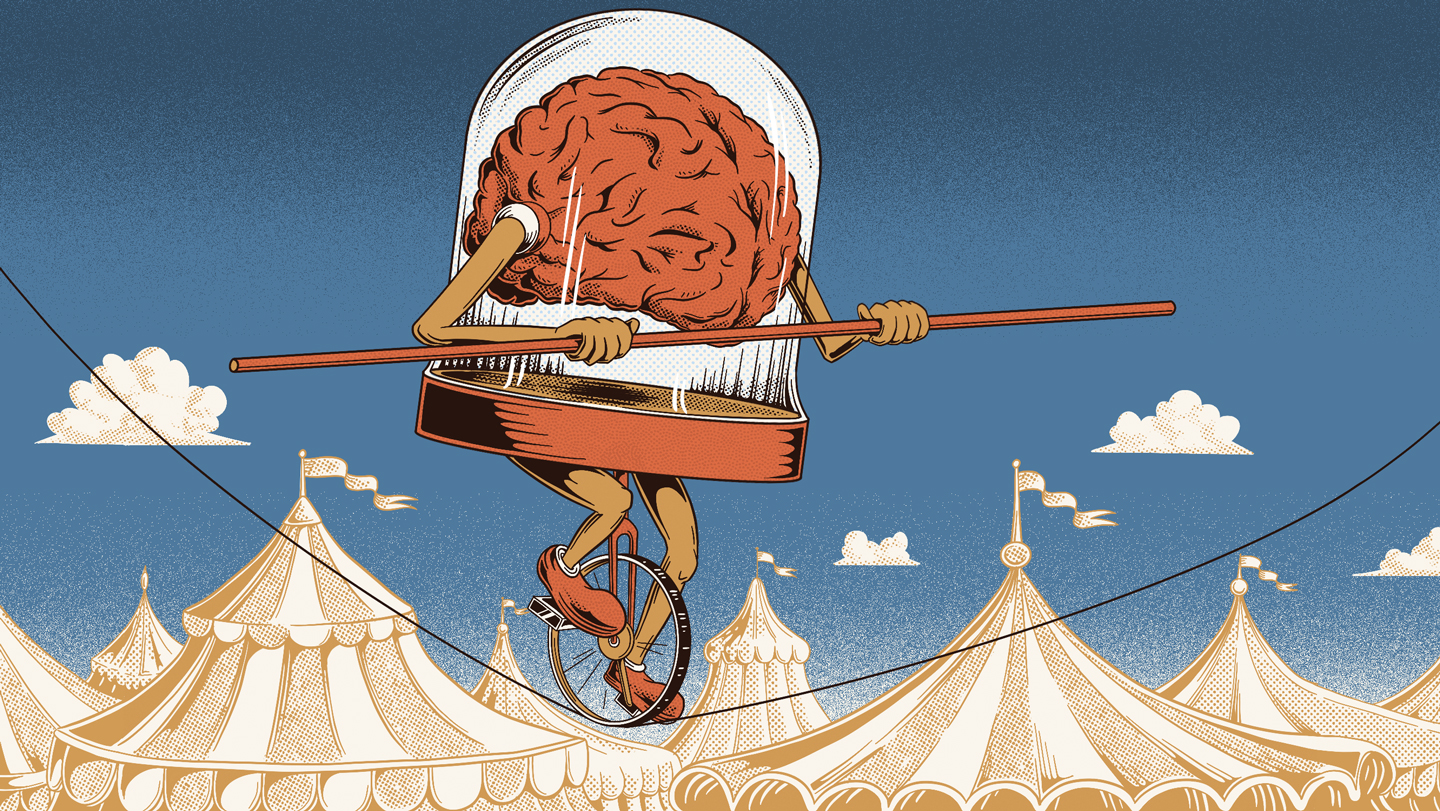
Clumps of mouse brain cells can learn to play a virtual game Skip to content Subscribe today Every print subscription comes with full digital access Subscribe Now Menu All Topics Health Humans Anthropology Health & Medicine Archaeology Psychology View All Life Animals Plants Ecosystems Paleontology Neuroscience Genetics Microbes View All Earth Agriculture Climate Oceans Environment View All Physics Materials Science Quantum Physics Particle Physics View All Space Astronomy Planetary Science Cosmology View All Magazine Menu All Stories Multimedia Reviews Puzzles Collections Educator Portal Century of Science Unsung characters Coronavirus Outbreak Newsletters Investors Lab About SN Explores Our Store SIGN IN Donate Home INDEPENDENT JOURNALISM SINCE 1921 SIGN IN Search Open search Close search Home INDEPENDENT JOURNALISM SINCE 1921 All Topics Earth Agriculture Climate Oceans Environment Humans Anthropology Health & Medicine Archaeology Psychology Life Animals Plants Ecosystems Paleontology Neuroscience Genetics Microbes Physics Materials Science Quantum Physics Particle Physics Space Astronomy Planetary Science Cosmology Tech Computing Artificial Intelligence Chemistry Math Science & Society All Topics Health Humans Humans Anthropology Health & Medicine Archaeology Psychology Recent posts in Humans Animals When were dogs domesticated? The oldest known dog DNA offers clues By Tom Metcalfe2 hours ago Archaeology Neandertals made antibacterial ointment, but may not have known it By Martin J. KernanMarch 24, 2026 Health & Medicine Amid vaccine policy whiplash, here’s how a pediatrician talks to families By Aimee CunninghamMarch 20, 2026 Life Life Animals Plants Ecosystems Paleontology Neuroscience Genetics Microbes Recent posts in Life Animals When were dogs domesticated? The oldest known dog DNA offers clues By Tom Metcalfe2 hours ago Neuroscience Clumps of mouse brain cells can learn to play a virtual game By Andrea Lius5 hours ago Physics These insects fly with their legs. Physics explains how By Emily ConoverMarch 24, 2026 Earth Earth Agriculture Climate Oceans Environment Recent posts in Earth Space How realistic is Project Hail Mary? By Tina Hesman Saey and Carolyn GramlingMarch 20, 2026 Earth Earth’s continental plates were moving 3.48 billion years ago By Douglas FoxMarch 19, 2026 Microbes How warming is shifting microbial worlds By Erin Garcia de JesúsMarch 19, 2026 Physics Physics Materials Science Quantum Physics Particle Physics Recent posts in Physics Particle Physics Antimatter traveled by truck for the first time By Emily Conover21 hours ago Physics These insects fly with their legs. Physics explains how By Emily ConoverMarch 24, 2026 Animals Female giant rainforest mantises grow up to strike harder than males By Susan MiliusMarch 23, 2026 Space Space Astronomy Planetary Science Cosmology Recent posts in Space Space NASA races to have the first moon base and nuclear-propulsion spacecraft By Nikk Ogasa and Lisa Grossman25 minutes ago Planetary Science A private moon lander challenges ideas about lunar volcanism By Lisa Grossman4 hours ago Space In a rare event, the moon got a massive new crater By Lisa GrossmanMarch 23, 2026 Neuroscience Clumps of mouse brain cells can learn to play a virtual game The organoids, tasked with balancing a pole on a moving cart, improved with feedback Getting brain organoids to perform virtual circus tricks — such as balancing a pole — gives researchers the chance to explore how learning happens. Philipp Beck By Andrea Lius 5 hours ago Share this:Share Share via email (Opens in new window) Email Share on Facebook (Opens in new window) Facebook Share on Reddit (Opens in new window) Reddit Share on X (Opens in new window) X Print (Opens in new window) Print Clumps of mouse brain cells about the size of peppercorns can gain the knowhow to perform a virtual circus trick. With some coaching, these mouse brain organoids learned to keep a pole upright on a virtual moving cart — the video game equivalent of balancing a ruler vertically on your palm — researchers report in the Feb. 24 Cell Reports. The organoids didn’t retain that knowledge for long, says cognitive neuroscientist Ash Robbins of the University of California, Santa Cruz. But ultimately, researchers hope that brain organoids can help them understand how healthy human brains learn, as well as how cognitive disorders such as Alzheimer’s disease impair this capacity. Sign up for our newsletter We summarize the week's scientific breakthroughs every Thursday. To get to that point, the organoids need to show long-term learning memory, but “short-term memory is a very good step towards that,” says neurobiologist Lena Smirnova of Johns Hopkins University. Her team has shown that organoids have the building blocks to learn. Other research has also suggested that human brain organoids can send and receive information but not necessarily use feedback to improve on specific tasks in real time. In the new study, Robbins and colleagues gave mouse brain organoids a task that demands constant control and has very little room for error. Solving the classic cartpole problem requires wheeling a virtual cart left and right to keep the vertical pole on it as steady as possible. The cell clumps must constantly react as if they were playing a video game, Robbins says. And to keep the pole standing, they have to make the right choice not once, not twice, but every single time. The mouse organoids sat on a computer chip that allowed them to communicate with the video game’s virtual environment. As an algorithm delivered feedback in the form of electrical stimulation to specific cells within the organoid that seemed to struggle with the task, the researchers could see the pole stand straight, wobble or fall over on a screen. “It’s literally like watching a friend play a game,” Robbins says. Organoids that got this coaching, called reinforcement learning, could balance the pole for at least 20 seconds nearly half the time. In contrast, organoids that received random training signals or none at all passed this threshold less than 5 percent of the time. The organoids played in 15-minute periods and took 45-minute breaks in between, after which they needed retraining. This suggests that long-term learning memory probably requires more complex signals that the organoids lack, such as the dopamine “reward” pathway, says David Haussler, a neuroscientist also at UC Santa Cruz. More elaborate systems in which multiple organoids work together, called assembloids, might retain the skills they gained during training, he says. For example, one organoid could try to learn while another supplies dopamine, rewarding and reinforcing the behavior. This was not the first time researchers have watched disembodied brain cells play video games. In 2022, single sheets of human neurons learned to play the table tennis simulation game Pong. More recently, the same gr
Clumps of mouse brain cells can learn to play a virtual game