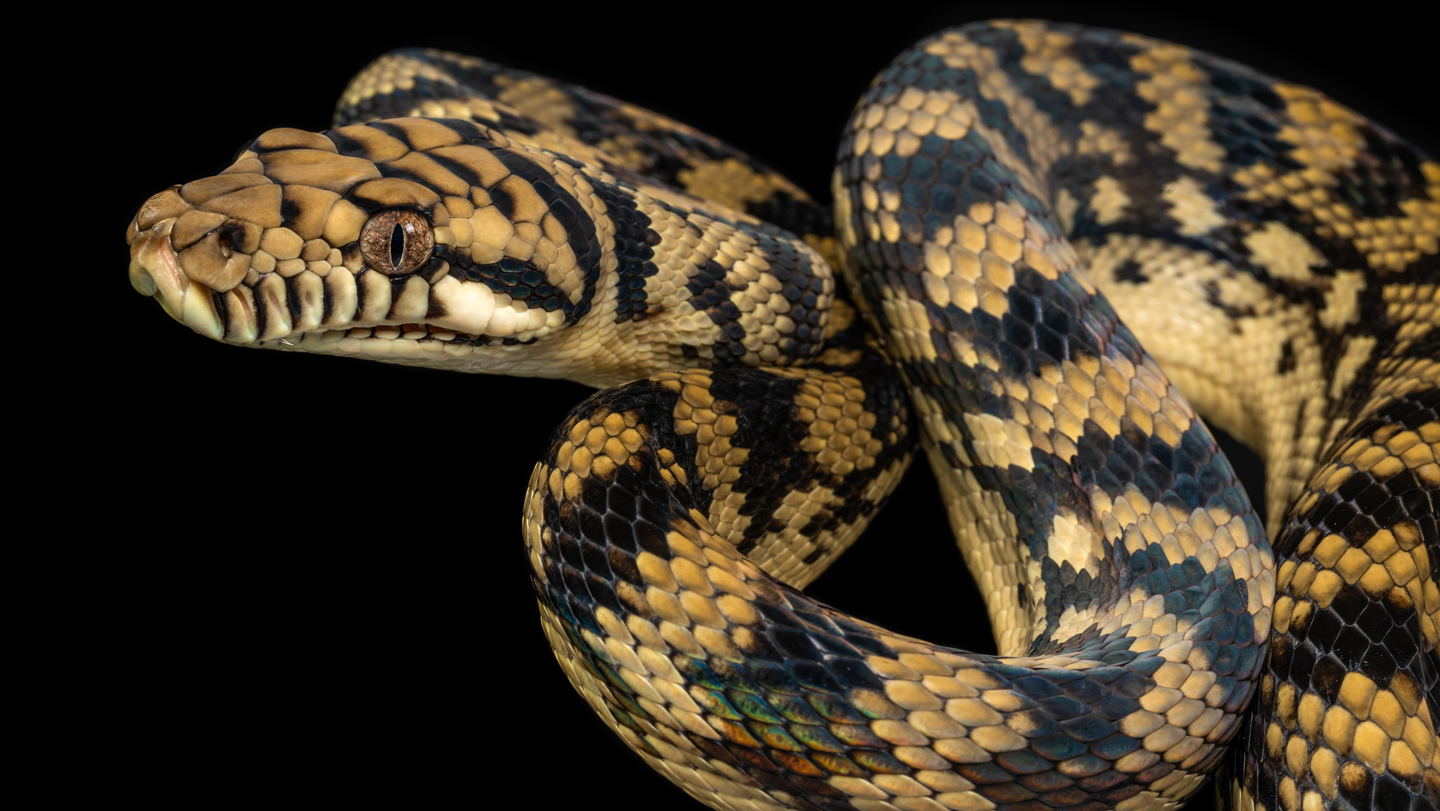
How snakes defy gravity to stand tall Skip to content Subscribe today Every print subscription comes with full digital access Subscribe Now Menu All Topics Health Humans Anthropology Health & Medicine Archaeology Psychology View All Life Animals Plants Ecosystems Paleontology Neuroscience Genetics Microbes View All Earth Agriculture Climate Oceans Environment View All Physics Materials Science Quantum Physics Particle Physics View All Space Astronomy Planetary Science Cosmology View All Magazine Menu All Stories Multimedia Reviews Puzzles Collections Educator Portal Century of Science Unsung characters Coronavirus Outbreak Newsletters Investors Lab About SN Explores Our Store SIGN IN Donate Home INDEPENDENT JOURNALISM SINCE 1921 SIGN IN Search Open search Close search Home INDEPENDENT JOURNALISM SINCE 1921 All Topics Earth Agriculture Climate Oceans Environment Humans Anthropology Health & Medicine Archaeology Psychology Life Animals Plants Ecosystems Paleontology Neuroscience Genetics Microbes Physics Materials Science Quantum Physics Particle Physics Space Astronomy Planetary Science Cosmology Tech Computing Artificial Intelligence Chemistry Math Science & Society All Topics Health Humans Humans Anthropology Health & Medicine Archaeology Psychology Recent posts in Humans Paleontology Early apes may not have evolved in East Africa By Jake BuehlerMarch 26, 2026 Science & Society Social media can be addictive, a jury finds. Research hints at a link By Sujata GuptaMarch 26, 2026 Health & Medicine Start cholesterol tests in childhood, new guidelines say By Erin Garcia de JesúsMarch 26, 2026 Life Life Animals Plants Ecosystems Paleontology Neuroscience Genetics Microbes Recent posts in Life Animals How snakes defy gravity to stand tall By Rohini Subrahmanyam11 hours ago Animals Watch the first video of a sperm whale birth captured by scientists By Lily BurtonMarch 26, 2026 Paleontology Early apes may not have evolved in East Africa By Jake BuehlerMarch 26, 2026 Earth Earth Agriculture Climate Oceans Environment Recent posts in Earth Space How realistic is Project Hail Mary? By Tina Hesman Saey and Carolyn GramlingMarch 20, 2026 Earth Earth’s continental plates were moving 3.48 billion years ago By Douglas FoxMarch 19, 2026 Microbes How warming is shifting microbial worlds By Erin Garcia de JesúsMarch 19, 2026 Physics Physics Materials Science Quantum Physics Particle Physics Recent posts in Physics Physics Water has a newfound ‘critical point’ that may help explain its quirks By Emily ConoverMarch 26, 2026 Particle Physics Antimatter traveled by truck for the first time By Emily ConoverMarch 24, 2026 Physics These insects fly with their legs. Physics explains how By Emily ConoverMarch 24, 2026 Space Space Astronomy Planetary Science Cosmology Recent posts in Space Astronomy A rare star in a tiny galaxy preserves a record of the early universe By Jay Bennett15 hours ago Space NASA races to have the first moon base and nuclear-propulsion spacecraft By Nikk Ogasa and Lisa GrossmanMarch 25, 2026 Planetary Science A private moon lander challenges ideas about lunar volcanism By Lisa GrossmanMarch 25, 2026 News Animals How snakes defy gravity to stand tall Tree-climbing snakes might localize control instead of stiffening their whole body Some tree-climbing snakes, such as this Australian brown tree snake, can lift up to 70 percent of their bodies into the air as they go vertically from a lower to a higher perch. Sibons photography/Alamy By Rohini Subrahmanyam 11 hours ago Share this:Share Share via email (Opens in new window) Email Share on Facebook (Opens in new window) Facebook Share on Reddit (Opens in new window) Reddit Share on X (Opens in new window) X Print (Opens in new window) Print As a long and wiry scrub python slithers its way from branch to branch on a tree, it can effortlessly lift itself upright to climb onto a higher perch. But how does it do it? With no arms and legs to hold itself up, how does it not topple over? It controls only the part that matters. Instead of exerting a huge effort to stiffen their entire body to stand upright, tree-climbing snakes may concentrate their bending energy and muscle activity within a small region at their base, researchers report February 25 in the Journal of the Royal Society Interface. The team’s mathematical analysis suggests that pairing such a strategy with whole-body muscle coordination might help snakes stand while expending as little energy as possible. Sign up for our newsletter We summarize the week's scientific breakthroughs every Thursday. “Snakes are kind of like muscular ropes,” says bioengineer and roboticist David Hu of Georgia Tech in Atlanta, who was not involved in the study. “And they can basically perform magic tricks, flexing their bodies and preventing [themselves] from falling.” In an earlier study, zoologist Bruce Jayne of the University of Cincinnati and a colleague showed that as gravity-defying snakes move upward, they activate a muscle along their spine. In the new study, Jayne and collaborators examined how snakes manage this limbless lift-off without buckling under their own weight. This scrub python strikes a familiar pose when crossing from one perch to another in the lab: a maximal curve at its bottom and a near vertical posture above that.Bruce C. Jayne/Univ. of Cincinnati The team videoed four snakes — three brown tree snakes (Boiga irregularis) and a scrub python (Simalia amesthistina) — vertically crossing gaps between perches in the lab. The footage showed that the creatures reliably contorted themselves into an S-like shape to do so, especially if the gap was large. The snakes were maximally curved close to where they were perched. Above that, they were nearly vertical, like a tall pole standing straight — with little to no tilt, gravity had almost no leverage to topple them. To understand the forces involved, the physicists modelled the creature mathematically as an active elastic filament — a soft structure that can sense its own shape and activate muscles in response — and explored two strategies of how the snake might stand up. In one, each part of the body responds locally to its own curvature. In the other, muscle activity — while still focused more at the bottom — coordinates across the body to minimize the energy needed to stand. Both approaches reproduced the S-shape, with most of the bending concentrated near the perch. But the global coordination strategy required less force. And in that scenario, the bending force dropped as more of the snake rose into the air. Given that the second approach minimizes both force and energy, the researchers suspect that even real snakes employ a similar strategy to make standing up tall as energy efficient as possible. The math also suggests that while the snakes may use relatively little force to strike the pose, they spend considerably more energy staying upright. In the videos, the
How snakes defy gravity to stand tall