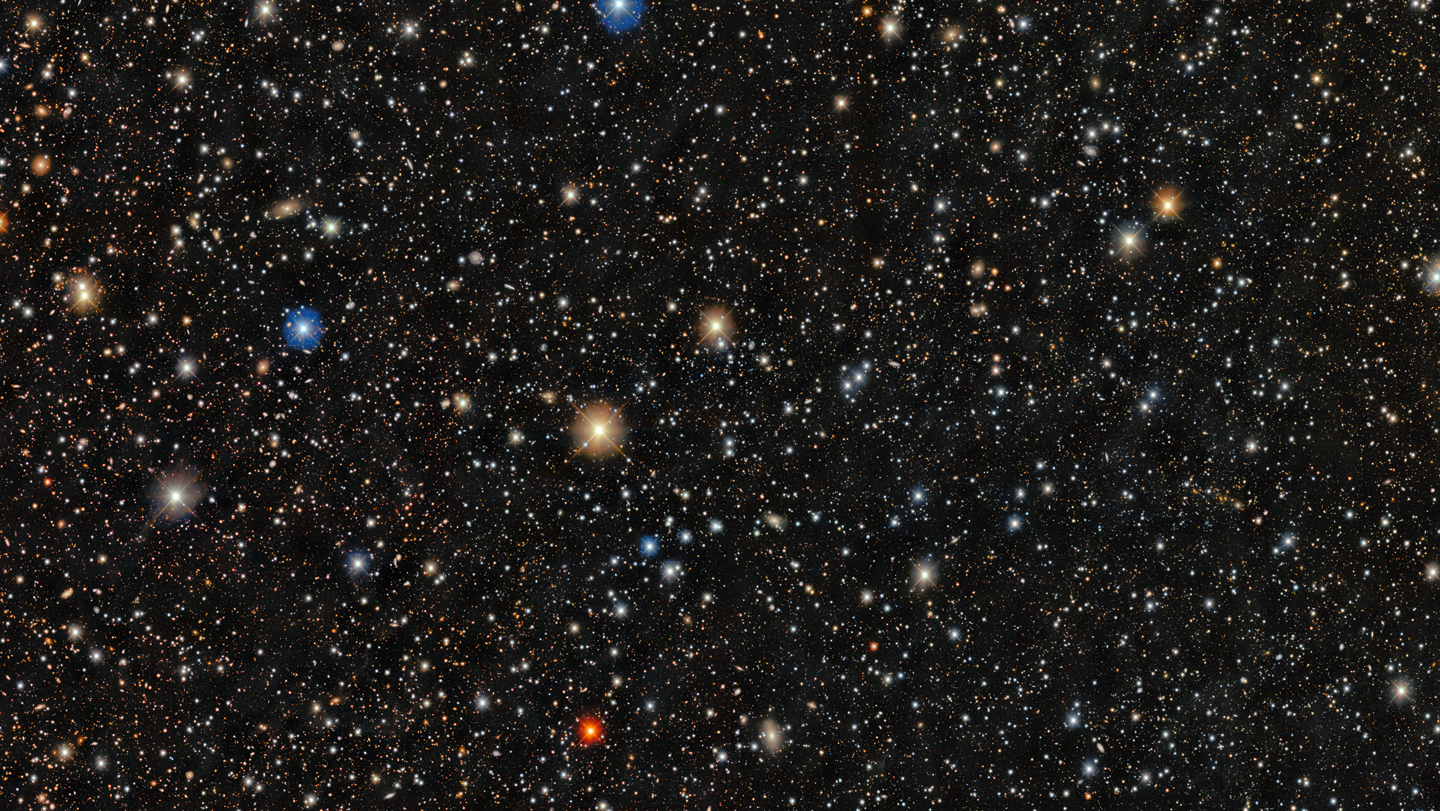
A rare star in a tiny galaxy preserves a record of the early universe Skip to content Subscribe today Every print subscription comes with full digital access Subscribe Now Menu All Topics Health Humans Anthropology Health & Medicine Archaeology Psychology View All Life Animals Plants Ecosystems Paleontology Neuroscience Genetics Microbes View All Earth Agriculture Climate Oceans Environment View All Physics Materials Science Quantum Physics Particle Physics View All Space Astronomy Planetary Science Cosmology View All Magazine Menu All Stories Multimedia Reviews Puzzles Collections Educator Portal Century of Science Unsung characters Coronavirus Outbreak Newsletters Investors Lab About SN Explores Our Store SIGN IN Donate Home INDEPENDENT JOURNALISM SINCE 1921 SIGN IN Search Open search Close search Home INDEPENDENT JOURNALISM SINCE 1921 All Topics Earth Agriculture Climate Oceans Environment Humans Anthropology Health & Medicine Archaeology Psychology Life Animals Plants Ecosystems Paleontology Neuroscience Genetics Microbes Physics Materials Science Quantum Physics Particle Physics Space Astronomy Planetary Science Cosmology Tech Computing Artificial Intelligence Chemistry Math Science & Society All Topics Health Humans Humans Anthropology Health & Medicine Archaeology Psychology Recent posts in Humans Paleontology Early apes may not have evolved in East Africa By Jake BuehlerMarch 26, 2026 Science & Society Social media can be addictive, a jury finds. Research hints at a link By Sujata GuptaMarch 26, 2026 Health & Medicine Start cholesterol tests in childhood, new guidelines say By Erin Garcia de JesúsMarch 26, 2026 Life Life Animals Plants Ecosystems Paleontology Neuroscience Genetics Microbes Recent posts in Life Animals How snakes defy gravity to stand tall By Rohini Subrahmanyam12 hours ago Animals Watch the first video of a sperm whale birth captured by scientists By Lily BurtonMarch 26, 2026 Paleontology Early apes may not have evolved in East Africa By Jake BuehlerMarch 26, 2026 Earth Earth Agriculture Climate Oceans Environment Recent posts in Earth Space How realistic is Project Hail Mary? By Tina Hesman Saey and Carolyn GramlingMarch 20, 2026 Earth Earth’s continental plates were moving 3.48 billion years ago By Douglas FoxMarch 19, 2026 Microbes How warming is shifting microbial worlds By Erin Garcia de JesúsMarch 19, 2026 Physics Physics Materials Science Quantum Physics Particle Physics Recent posts in Physics Physics Water has a newfound ‘critical point’ that may help explain its quirks By Emily ConoverMarch 26, 2026 Particle Physics Antimatter traveled by truck for the first time By Emily ConoverMarch 24, 2026 Physics These insects fly with their legs. Physics explains how By Emily ConoverMarch 24, 2026 Space Space Astronomy Planetary Science Cosmology Recent posts in Space Astronomy A rare star in a tiny galaxy preserves a record of the early universe By Jay Bennett16 hours ago Space NASA races to have the first moon base and nuclear-propulsion spacecraft By Nikk Ogasa and Lisa GrossmanMarch 25, 2026 Planetary Science A private moon lander challenges ideas about lunar volcanism By Lisa GrossmanMarch 25, 2026 Astronomy A rare star in a tiny galaxy preserves a record of the early universe The chemically primitive star appears to preserve debris from a first-generation supernova This image shows the region around the ultrafaint dwarf galaxy Pictor II. The galaxy contains a star so primitive that it preserves chemical signatures from the early universe. CTIO/NOIRLab/AURA and NSF, DOE By Jay Bennett 16 hours ago Share this:Share Share via email (Opens in new window) Email Share on Facebook (Opens in new window) Facebook Share on Reddit (Opens in new window) Reddit Share on X (Opens in new window) X Print (Opens in new window) Print In an ancient dwarf galaxy on the outskirts of the Milky Way, astronomers have discovered one of the most chemically primitive stars ever seen. Named PicII-503, the star’s extreme lack of heavy elements indicates it’s from the second generation of stars, preserving chemical traces from the very first stars in the cosmos. Described March 16 in Nature Astronomy, PicII-503 is the first unambiguous second-generation star found in an ultrafaint dwarf galaxy, providing a window into how these stars formed during the initial chemical enrichment of the universe. Sign up for our newsletter We summarize the week's scientific breakthroughs every Thursday. “It’s a fantastic discovery,” says MIT astrophysicist Anna Frebel, who was not involved in the study. “I know how hard it is to find these stars. They are so, so rare.” Astronomers have found about 10 stars as primitive as PicII-503 in the Milky Way’s halo, a diffuse sphere of stars surrounding the galaxy’s disk. Researchers think these stars were captured when our galaxy absorbed other, smaller galaxies. “Finding an equivalent star in a … dwarf galaxy — and this one is a particularly old one — is really, really exciting because it very much validates this idea,” Frebel says. The star PicII-503 (center) has the lowest abundance of iron of any star found outside the Milky Way, with less than one forty thousandth the amount of iron found in the sun.CTIO/NOIRLab/AURA and NSF, DOE PicII-503 was discovered in 2024 in data from the Víctor M. Blanco Telescope in Chile. Follow-up observations the next year detected extremely low abundances of iron and calcium and a relatively high level of carbon, confirming the star is a relic of the early universe. “Immediately we knew that there was something really exciting going on,” says astronomer Ani Chiti of Stanford University. The first-generation stars were made almost entirely of hydrogen and helium. By fusing these elements into heavier atoms before exploding in supernovas, they suffused the early universe with new elements. Those first stars probably survived only a few million years, but the addition of trace elements such as iron, carbon and oxygen to clouds of cosmic gas caused those clouds to cool and fracture into small clumps, leading to the formation of smaller, cooler, longer-lasting stars. Some second-generation stars such as PicII-503 have survived more than 12 billion years to the modern day. The dearth of iron and calcium in PicII-503 is so extreme that the star probably formed from material produced in just one supernova, putting it near the beginning of the second generation of stars. And like its companions in the Milky Way’s halo, it has a relative excess of carbon. This chemical signature supports theories that the first supernovas were relatively low energy, ejecting outer layers of lighter elements such as carbon while heavier elements such as iron and calcium collapsed back into the stars’ cores. PicII-503’s presence in an ultrafaint dwarf galaxy also supports this idea. “You must have had a supernova that that was not so energetic because, otherw
A rare star in a tiny galaxy preserves a record of the early universe