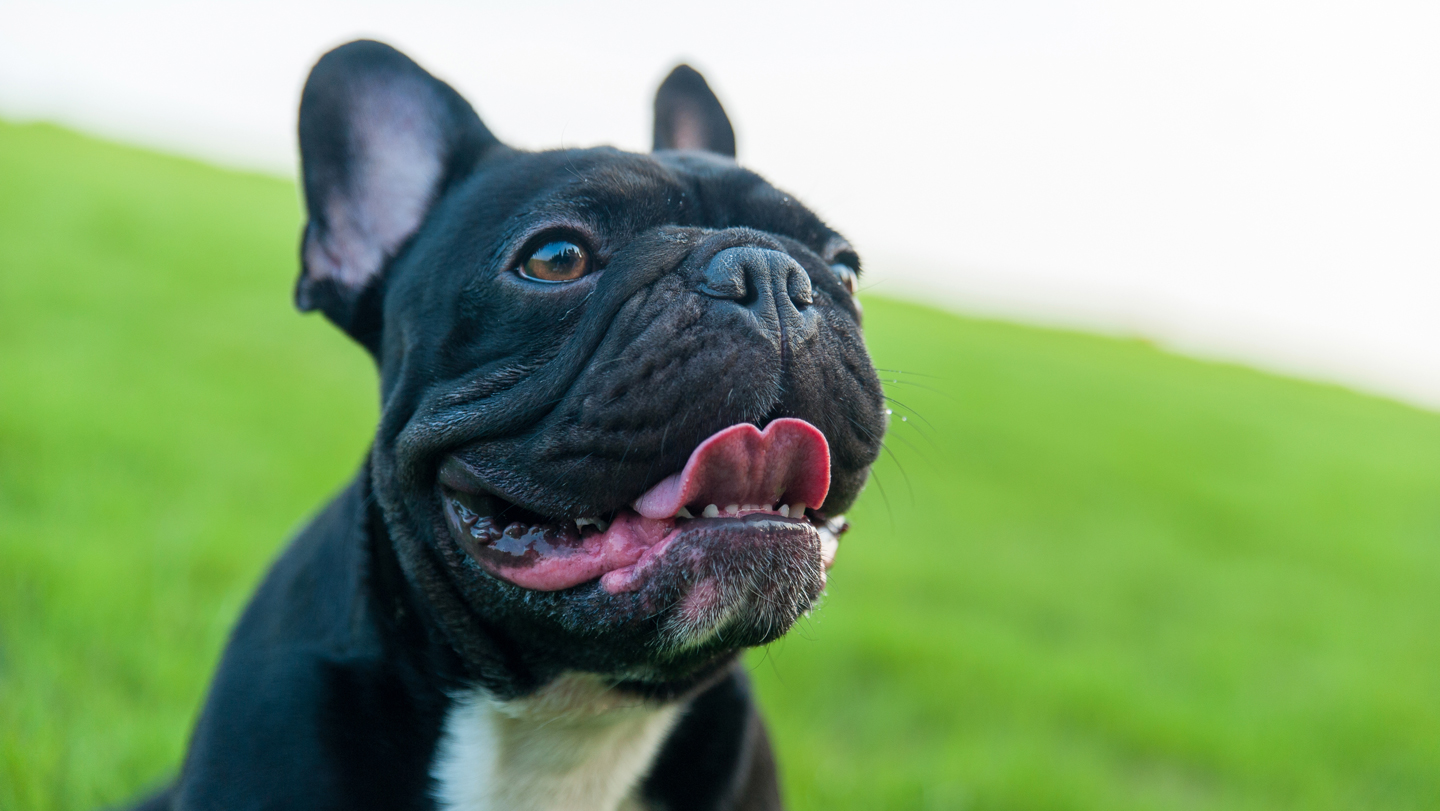
Some dog breeds carry a higher risk of breathing problems Skip to content Subscribe today Every print subscription comes with full digital access Subscribe Now Menu All Topics Health Humans Anthropology Health & Medicine Archaeology Psychology View All Life Animals Plants Ecosystems Paleontology Neuroscience Genetics Microbes View All Earth Agriculture Climate Oceans Environment View All Physics Materials Science Quantum Physics Particle Physics View All Space Astronomy Planetary Science Cosmology View All Magazine Menu All Stories Multimedia Reviews Puzzles Collections Educator Portal Century of Science Unsung characters Coronavirus Outbreak Newsletters Investors Lab About SN Explores Our Store SIGN IN Donate Home INDEPENDENT JOURNALISM SINCE 1921 SIGN IN Search Open search Close search Home INDEPENDENT JOURNALISM SINCE 1921 All Topics Earth Agriculture Climate Oceans Environment Humans Anthropology Health & Medicine Archaeology Psychology Life Animals Plants Ecosystems Paleontology Neuroscience Genetics Microbes Physics Materials Science Quantum Physics Particle Physics Space Astronomy Planetary Science Cosmology Tech Computing Artificial Intelligence Chemistry Math Science & Society All Topics Health Humans Humans Anthropology Health & Medicine Archaeology Psychology Recent posts in Humans Artificial Intelligence Real-world medical questions stump AI chatbots By Tina Hesman SaeyFebruary 17, 2026 Health & Medicine A simple shift in schedule could make cancer immunotherapy work better By Elie DolginFebruary 12, 2026 Health & Medicine This baby sling turns sunlight into treatment for newborn jaundice By Elie DolginFebruary 12, 2026 Life Life Animals Plants Ecosystems Paleontology Neuroscience Genetics Microbes Recent posts in Life Animals Some dog breeds carry a higher risk of breathing problems By Jake Buehler4 hours ago Animals Regeneration of fins and limbs relies on a shared cellular playbook By Elizabeth Pennisi6 hours ago Animals How tracking golden eagles in Nevada revealed a desert ‘death vortex’ By Martin J. Kernan7 hours ago Earth Earth Agriculture Climate Oceans Environment Recent posts in Earth Oceans Evolution didn’t wait long after the dinosaurs died By Elie DolginFebruary 13, 2026 Earth Earth’s core may hide dozens of oceans of hydrogen By Nikk OgasaFebruary 10, 2026 Animals Some dung beetles dig deep to keep their eggs cool By Elizabeth PennisiFebruary 4, 2026 Physics Physics Materials Science Quantum Physics Particle Physics Recent posts in Physics Physics Physicists dream up ‘spacetime quasicrystals’ that could underpin the universe By Emily ConoverFebruary 17, 2026 Physics A precise proton measurement helps put a core theory of physics to the test By Emily ConoverFebruary 11, 2026 Physics The only U.S. particle collider shuts down – so a new one may rise By Emily ConoverFebruary 6, 2026 Space Space Astronomy Planetary Science Cosmology Recent posts in Space Astronomy This inside-out planetary system has astronomers scratching their heads By Adam MannFebruary 12, 2026 Space Artemis II is returning humans to the moon with science riding shotgun By Lisa GrossmanFebruary 4, 2026 Physics A Greek star catalog from the dawn of astronomy, revealed By Adam MannJanuary 30, 2026 News Animals Some dog breeds carry a higher risk of breathing problems The findings help quantify the negative health outcomes of breeding extreme body shapes Smooshed “brachycephalic“ snouts such as those found in pugs and French bulldogs (shown) bring heightened risk of breathing problems. Scientists have quantified the severity across more than a dozen breeds. Zhao Hui/Getty Images By Jake Buehler 4 hours ago Share this:Share Share via email (Opens in new window) Email Share on Facebook (Opens in new window) Facebook Share on Reddit (Opens in new window) Reddit Share on X (Opens in new window) X Print (Opens in new window) Print Many people find their flattened faces cute, but among dogs bred with a squished visage, 11 percent or less of some breeds can breathe easily. The findings, published February 18 in PLOS One, evaluate a major health cost of breeding dogs with shortened “brachycephalic” skulls: chronically obstructed airways. In the United Kingdom, some brachycephalic breeds “have become incredibly popular in recent years, particularly the French bulldog,” says Francesca Tomlinson, a veterinarian and researcher at the University of Cambridge. Sign up for our newsletter We summarize the week's scientific breakthroughs every Thursday. That popularity has meant a more direct spotlight on the health issues these dogs can have, including brachycephalic obstructive airway syndrome (BOAS). The dogs’ truncated skull can mean the airway is narrowed, resulting in difficult, noisy, snorting breathing. Researchers had already investigated the syndrome’s severity in pugs and bulldogs, but little was known about the condition in the many other flat-faced breeds. Grades on breathing The researchers used a 0 to 3 scale to record the severity of brachycephalic obstructive airway syndrome (BOAS) symptoms in the dogs examined in the study. Pekingese (shown) had one of the lowest rates of Grade 0, typified by easy breathing. Source: F. Tomlinson, et al./ PLOS One 2026 (CC-BY 4.0), Image: Antagain/iStock/Getty Images Plus (dog photo), adapted by J. HirshfeldSource: F. Tomlinson, et al./ PLOS One 2026 (CC-BY 4.0), Image: Antagain/iStock/Getty Images Plus (dog photo), adapted by J. Hirshfeld From September 2021 to April 2024, Tomlinson and her colleagues examined nearly 900 dogs across 14 additional brachycephalic breeds. The team ran standardized exercise tests on the dogs, ranking their breathing performance based on the presence of established syndrome symptoms like loud or obstructed breathing. The dogs were graded on a 0 to 3 scale of symptom severity established in previous research, where 0 is the absence of noisy breathing. The researchers also took detailed measurements of the dogs’ heads and bodies. “The risk [of the condition] varies quite significantly across the different breeds,” Tomlinson says. Boxers and Staffordshire bull terriers, for instance, have a fairly low incidence of breathing issues. But the team found that Pekingese and Japanese chin dogs are in the high-risk category alongside bulldogs and pugs. Just 11 percent of Pekingese scored the healthiest grade of 0, compared with about seven percent of pugs. The most important factors driving the airway obstruction were the face’s flatness, the narrowness of the nostrils and the dog’s relative obesity. “[The study] confirms much of what the science and biology has known for decades,” says Dan O’Neill, an animal epidemiologist at the Royal Veterinary College in London. “Artificially selecting dogs for unnaturally short skulls reduces the ability of these dogs to breathe, sleep, exercise and live a complete canine life.” Findings like these m
Some dog breeds carry a higher risk of breathing problems