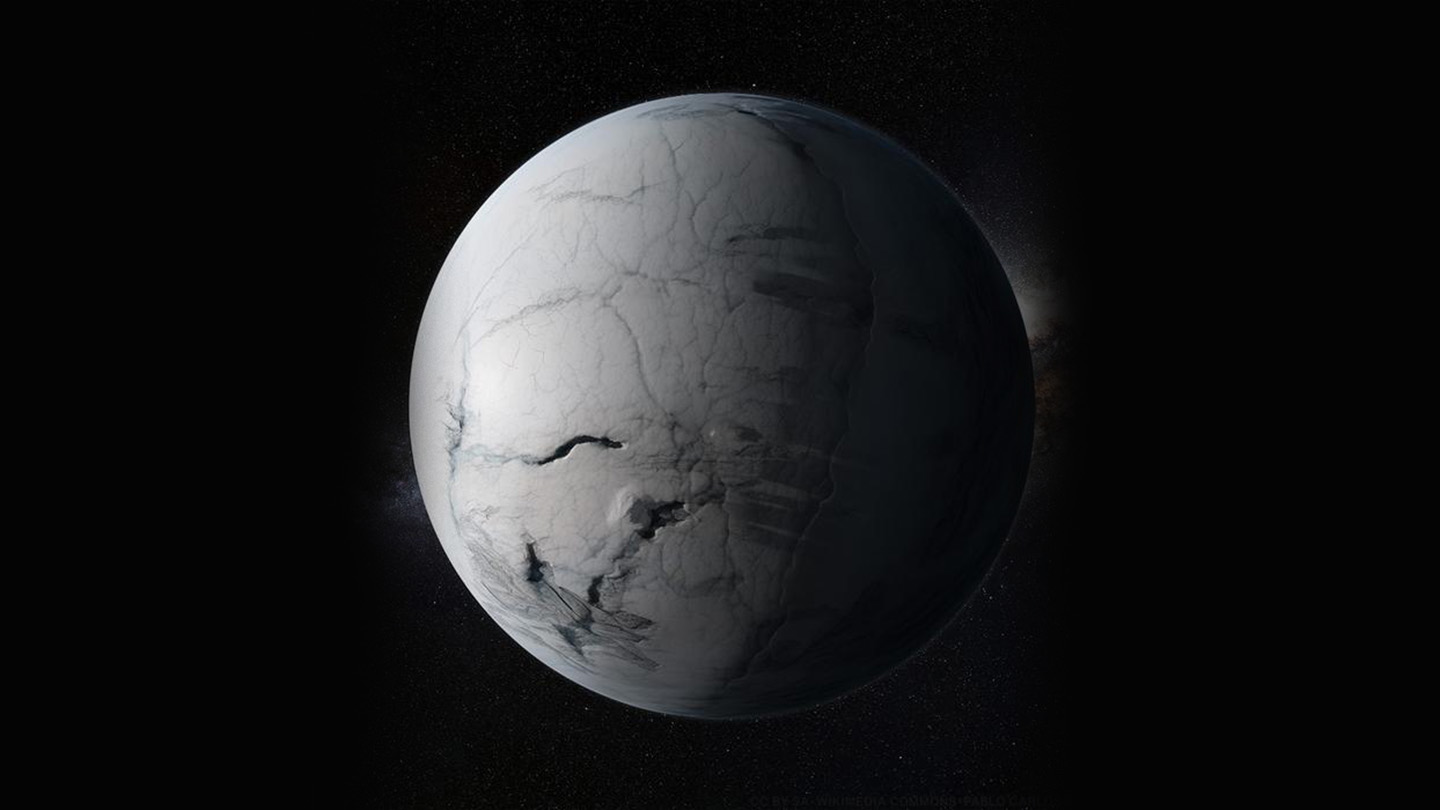
Snowball Earth might have had a dynamic climate and open seas Skip to content Subscribe today Every print subscription comes with full digital access Subscribe Now Menu All Topics Health Humans Anthropology Health & Medicine Archaeology Psychology View All Life Animals Plants Ecosystems Paleontology Neuroscience Genetics Microbes View All Earth Agriculture Climate Oceans Environment View All Physics Materials Science Quantum Physics Particle Physics View All Space Astronomy Planetary Science Cosmology View All Magazine Menu All Stories Multimedia Reviews Puzzles Collections Educator Portal Century of Science Unsung characters Coronavirus Outbreak Newsletters Investors Lab About SN Explores Our Store SIGN IN Donate Home INDEPENDENT JOURNALISM SINCE 1921 SIGN IN Search Open search Close search Home INDEPENDENT JOURNALISM SINCE 1921 All Topics Earth Agriculture Climate Oceans Environment Humans Anthropology Health & Medicine Archaeology Psychology Life Animals Plants Ecosystems Paleontology Neuroscience Genetics Microbes Physics Materials Science Quantum Physics Particle Physics Space Astronomy Planetary Science Cosmology Tech Computing Artificial Intelligence Chemistry Math Science & Society All Topics Health Humans Humans Anthropology Health & Medicine Archaeology Psychology Recent posts in Humans Chemistry Machine learning streamlines the complexities of making better proteins By Skyler Ware5 hours ago Health & Medicine Home HPV tests won’t replace the ob-gyn By Jamie Ducharme10 hours ago Artificial Intelligence Real-world medical questions stump AI chatbots By Tina Hesman SaeyFebruary 17, 2026 Life Life Animals Plants Ecosystems Paleontology Neuroscience Genetics Microbes Recent posts in Life Paleontology A mouth built for efficiency may have helped the earliest bird fly By Jay Bennett8 hours ago Animals Some dog breeds carry a higher risk of breathing problems By Jake BuehlerFebruary 18, 2026 Animals Regeneration of fins and limbs relies on a shared cellular playbook By Elizabeth PennisiFebruary 18, 2026 Earth Earth Agriculture Climate Oceans Environment Recent posts in Earth Climate Snowball Earth might have had a dynamic climate and open seas By Michael Marshall7 hours ago Oceans Evolution didn’t wait long after the dinosaurs died By Elie DolginFebruary 13, 2026 Earth Earth’s core may hide dozens of oceans of hydrogen By Nikk OgasaFebruary 10, 2026 Physics Physics Materials Science Quantum Physics Particle Physics Recent posts in Physics Physics Physicists dream up ‘spacetime quasicrystals’ that could underpin the universe By Emily ConoverFebruary 17, 2026 Physics A precise proton measurement helps put a core theory of physics to the test By Emily ConoverFebruary 11, 2026 Physics The only U.S. particle collider shuts down – so a new one may rise By Emily ConoverFebruary 6, 2026 Space Space Astronomy Planetary Science Cosmology Recent posts in Space Astronomy This inside-out planetary system has astronomers scratching their heads By Adam MannFebruary 12, 2026 Space Artemis II is returning humans to the moon with science riding shotgun By Lisa GrossmanFebruary 4, 2026 Physics A Greek star catalog from the dawn of astronomy, revealed By Adam MannJanuary 30, 2026 News Climate Snowball Earth might have had a dynamic climate and open seas Rocks from a global ice age over 600 million years ago show records of an active climate Our planet’s average temperature plummeted between 717 and 658 million years ago, causing a worldwide ice age dubbed Snowball Earth (illustrated). Pablo Carlos Budassi By Michael Marshall 7 hours ago Share this:Share Share via email (Opens in new window) Email Share on Facebook (Opens in new window) Facebook Share on Reddit (Opens in new window) Reddit Share on X (Opens in new window) X Print (Opens in new window) Print Over 600 million years ago, most of Earth completely froze over, becoming “Snowball Earth.” But even during this frigid period, the climate still behaved in familiar ways, earth scientist Chloe Griffin and colleagues report in the April 1 Earth and Planetary Science Letters. There even seems to have been a tropical climate cycle, like modern El Niños and La Niñas. “Everyone thought that the climate system would be really quite stable due to global ice coverage,” says Griffin, of the University of Southampton in England. Instead, she and her colleagues found evidence of an active climate and a partially open ocean. Sign up for our newsletter We summarize the week's scientific breakthroughs every Thursday. Earth experienced its first freezing spell about 2.4 billion years ago. Then, during the Cryogenian period about 720 to 635 million years ago, there were two Snowball Earth epochs. The first, the Sturtian glaciation, lasted from about 717 to 658 million years ago. Griffin and her team studied Sturtian rocks from the Garvellach Islands, off the west coast of Scotland. The rocks contain beautifully preserved stacks of thin layers, alternating between coarse and fine sediments. This is unusual for rocks from the Cryogenian: Most are badly eroded and jumbled because glaciers tore them up. Today, such layers are found under glacial lakes. Each summer, coarse sediments are carried into the lake by glacial meltwater. But during the winter, the meltwater ceases, so only fine clays are deposited. As a result, each year produces two distinct layers. This process, Griffin says, is what produced the Sturtian rocks. The rocks contain about 2,600 pairs of layers, meaning they recorded about 2,600 years. It’s “unprecedented” to find annual records this far back in time, says study coauthor Thomas Gernon, an earth scientist also at the University of Southampton. These thin layers of rock, on the Garvellach Islands off the coast of Scotland, hold clues to the behavior of the climate during Snowball Earth.Thomas Gernon/Univ. of Southhampton Each layer’s thickness hints at the weather conditions in that season. For example, a warm summer means more glacier movements and erosion, producing a thick layer of sediment. The researchers mathematically analyzed the thickness of the layers to look for patterns. They found four distinct cycles, repeating every 4 to 4.5 layers, 9 layers, 13.7 to 16.9 layers and 130 to 150 layers. These all correspond to well-known modern-day climate cycles, assuming that the layers were laid down annually. The 4-to-4.5-year cycle most resembles the El Niño-Southern Oscillation, in which the tropical Pacific Ocean alternately releases heat into the atmosphere, creating El Niño conditions, and absorbs heat from the air, creating La Niña conditions. Griffin says her team’s findings reflect “some form of heat transport between an ocean and atmosphere occurring in the tropics,” which indicates there must have been some open ocean, probably near the equator. The remaining three cycles seem to represent the sun’s intensity waxing and waning, the researchers concluded.
Snowball Earth might have had a dynamic climate and open seas