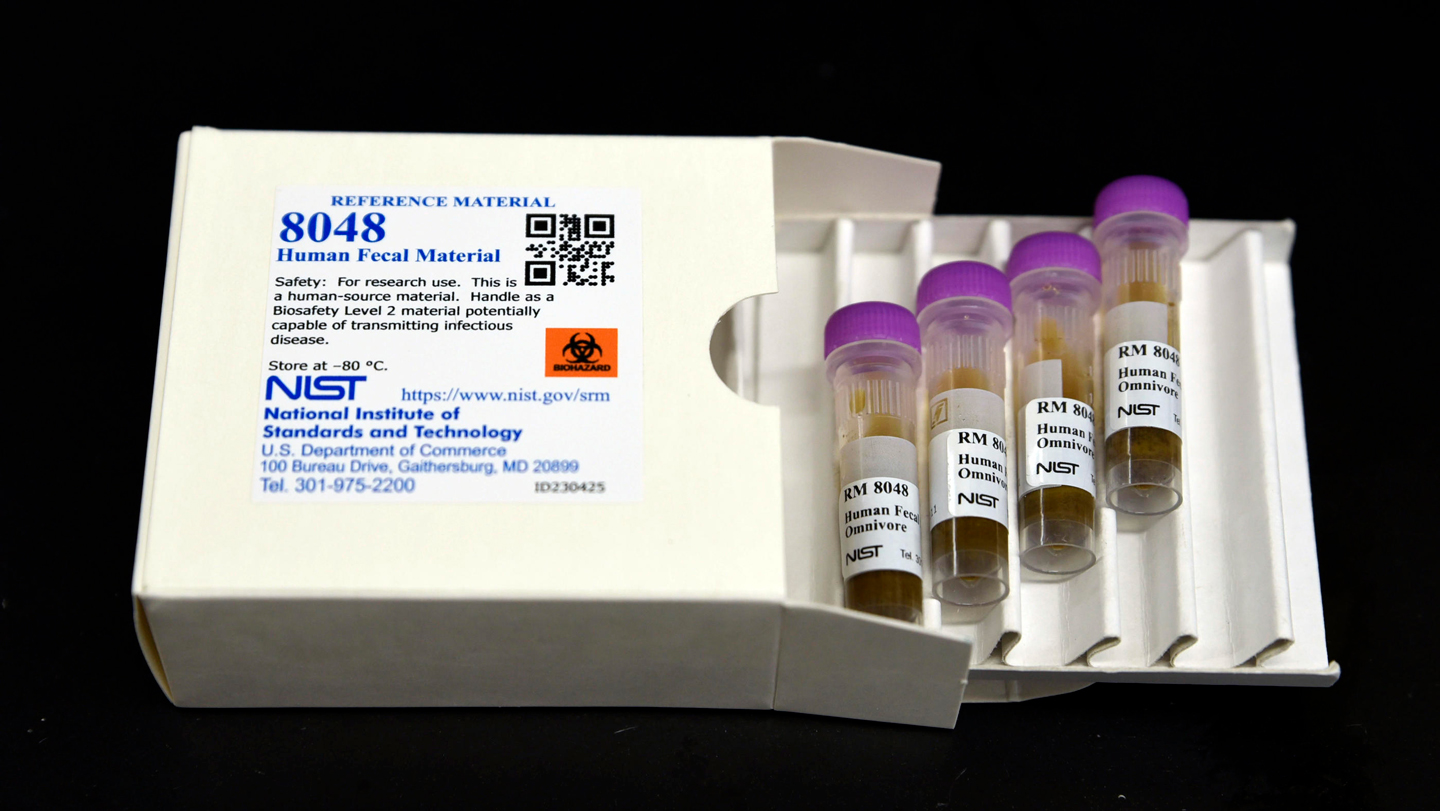
Can you trust the results from gut microbiome tests? Maybe not Skip to content Subscribe today Every print subscription comes with full digital access Subscribe Now Menu All Topics Health Humans Anthropology Health & Medicine Archaeology Psychology View All Life Animals Plants Ecosystems Paleontology Neuroscience Genetics Microbes View All Earth Agriculture Climate Oceans Environment View All Physics Materials Science Quantum Physics Particle Physics View All Space Astronomy Planetary Science Cosmology View All Magazine Menu All Stories Multimedia Reviews Puzzles Collections Educator Portal Century of Science Unsung characters Coronavirus Outbreak Newsletters Investors Lab About SN Explores Our Store SIGN IN Donate Home INDEPENDENT JOURNALISM SINCE 1921 SIGN IN Search Open search Close search Home INDEPENDENT JOURNALISM SINCE 1921 All Topics Earth Agriculture Climate Oceans Environment Humans Anthropology Health & Medicine Archaeology Psychology Life Animals Plants Ecosystems Paleontology Neuroscience Genetics Microbes Physics Materials Science Quantum Physics Particle Physics Space Astronomy Planetary Science Cosmology Tech Computing Artificial Intelligence Chemistry Math Science & Society All Topics Health Humans Humans Anthropology Health & Medicine Archaeology Psychology Recent posts in Humans Health & Medicine Can you trust the results from gut microbiome tests? Maybe not By Tina Hesman Saey5 hours ago Anthropology Mosquitoes began biting humans more than a million years ago By Tom Metcalfe5 hours ago Life An African monkey ate a rope squirrel and came down with mpox By Erin Garcia de JesúsFebruary 24, 2026 Life Life Animals Plants Ecosystems Paleontology Neuroscience Genetics Microbes Recent posts in Life Animals Here’s how honeyeaters and other birds thrive on sugary diets By Bethany Brookshire2 hours ago Anthropology Mosquitoes began biting humans more than a million years ago By Tom Metcalfe5 hours ago Animals Climate change could threaten monarch mass migration By Erin Garcia de JesúsFebruary 25, 2026 Earth Earth Agriculture Climate Oceans Environment Recent posts in Earth Animals Climate change could threaten monarch mass migration By Erin Garcia de JesúsFebruary 25, 2026 Earth Metal pollution from a rocket reentry detected for the first time By Adam MannFebruary 25, 2026 Climate Halting irreversible changes to Antarctica depends on choices made today By Carolyn GramlingFebruary 20, 2026 Physics Physics Materials Science Quantum Physics Particle Physics Recent posts in Physics Physics Here’s why sneakers squeak on the basketball court By Emily ConoverFebruary 25, 2026 Animals Intricate silk helps net-casting spiders ensnare prey in webs By Emily ConoverFebruary 24, 2026 Physics Physicists dream up ‘spacetime quasicrystals’ that could underpin the universe By Emily ConoverFebruary 17, 2026 Space Space Astronomy Planetary Science Cosmology Recent posts in Space Earth Metal pollution from a rocket reentry detected for the first time By Adam MannFebruary 25, 2026 Planetary Science Venus has a massive lava tube By Tom MetcalfeFebruary 23, 2026 Science & Society Project Hail Mary made us wonder how to survive a trip to interstellar space By Tina Hesman SaeyFebruary 20, 2026 News Health & Medicine Can you trust the results from gut microbiome tests? Maybe not Read this before you make health decisions based on a consumer test of your gut microbes The National Institute of Standards and Technology created a standardized fecal sample. Companies that analyzed identical samples of the standard produced results as varied as the microbes carried by different people. NIST By Tina Hesman Saey 5 hours ago Share this:Share Share via email (Opens in new window) Email Share on Facebook (Opens in new window) Facebook Share on Reddit (Opens in new window) Reddit Share on X (Opens in new window) X Print (Opens in new window) Print Listen to this article This is a human-written story voiced by AI. Got feedback? Take our survey . (See our AI policy here .) Finding out what gut microbes a person carries may not be as easy as many companies advertise. Seven direct-to-consumer microbiome testing companies each got three identical fecal samples but returned different results about which gut microbes were present, researchers report February 26 in Communications Biology. The results highlight discrepancies among companies that claim to give consumers insight about their gut health. That matters because consumers may take probiotics they don’t need, change their diets in harmful ways or even get fecal transplants based on inaccurate microbiome test results, say researchers from the University of Maryland in Baltimore and the National Institute of Standards and Technology in Gaithersburg, Md. (Molecular geneticist Scott Jackson has since left NIST and is now a consultant for companies whose products involve microbes.) Sign up for our newsletter We summarize the week's scientific breakthroughs every Thursday. The NIST team created a fecal standard by putting bowel movements from multiple people in a blender to create a homogenized sample. “We know that it is identical in biology across all those samples,” NIST microbiologist Stephanie Servetas said February 25 during a news briefing. “What this material is meant to do is really to say how reproducible are the results, either between companies or within a company, but it’s not going to be able to tell us who was closest to the correct answer.” Some companies were consistent with the microbes they identified across the three samples. But one company produced a drastically different result on one of the three samples it tested. It classified the two similar results as “healthy” and the outlier as “unhealthy.” Others identified many of the same types of bacteria across the replicated samples but showed varying amounts of those bacteria. The discrepancies between the companies’ results on the standard sample were similar to variability among samples that came from different people. NIST began selling the fecal standard to companies last year to use for calibration and quality control, which may result in improved testing methods in the future, Servetas said. The aim isn’t to force companies to adopt the same methods or to stifle innovation, she said, but “there should be some minimum guidelines and some controls” that would make results more consistent. One sample, three results One company had big inconsistencies in the genera of microbes (indicated by different colors with gray being unspecified) it identified in three replicates of a standard sample. The company classified the first two results as healthy and the third as unhealthy. S.L. Servetas et al./Communications Biology 2026S.L. Servetas et al./Communications Biology 2026 Questions or comments on this article? E-mail us at feedback@sciencenews.org | Reprints FAQ Citations S.L. Servetas et al. Evaluating
Can you trust the results from gut microbiome tests? Maybe not