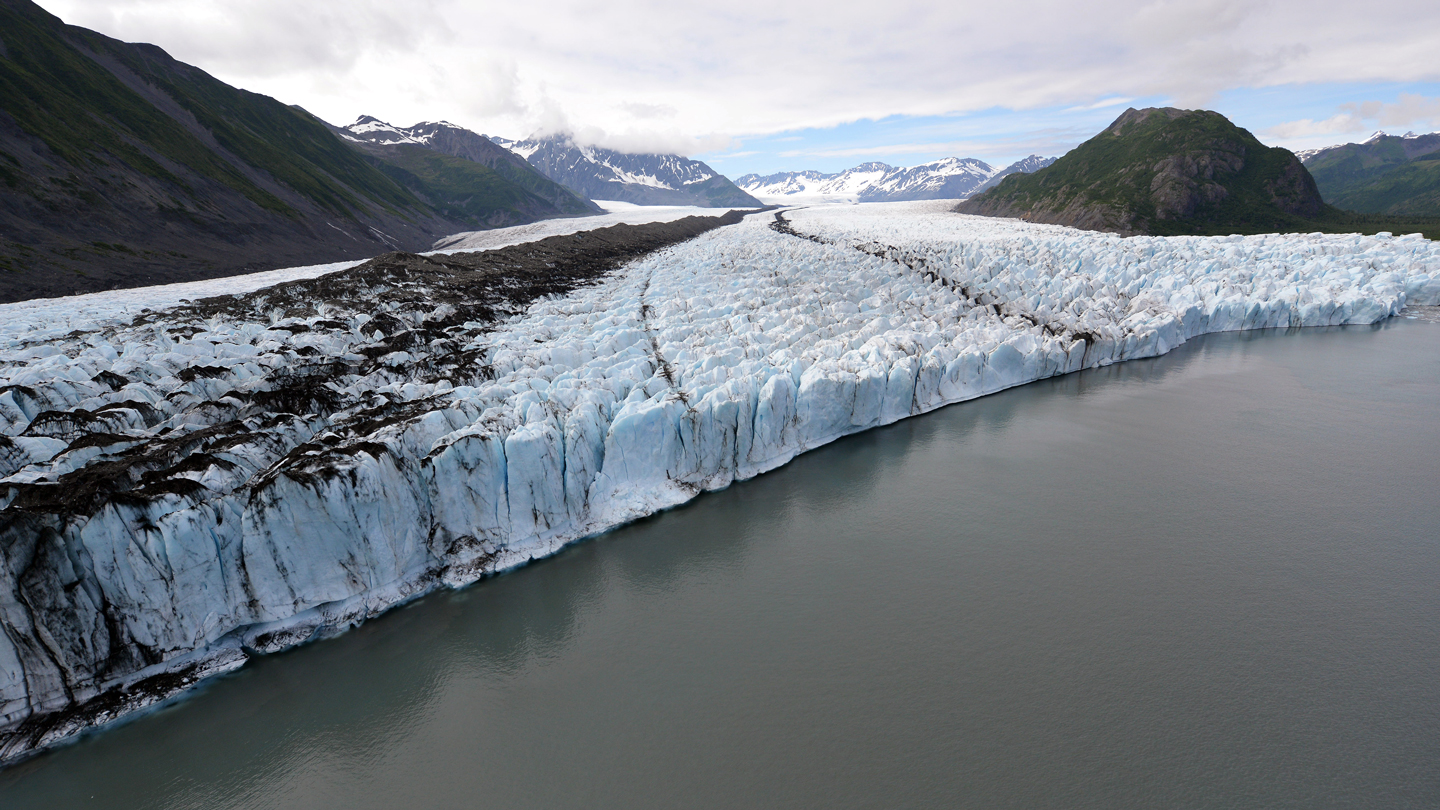
Lakes are growing in Alaska. That's not entirely a bad thing Skip to content Subscribe today Every print subscription comes with full digital access Subscribe Now Menu All Topics Health Humans Anthropology Health & Medicine Archaeology Psychology View All Life Animals Plants Ecosystems Paleontology Neuroscience Genetics Microbes View All Earth Agriculture Climate Oceans Environment View All Physics Materials Science Quantum Physics Particle Physics View All Space Astronomy Planetary Science Cosmology View All Magazine Menu All Stories Multimedia Reviews Puzzles Collections Educator Portal Century of Science Unsung characters Coronavirus Outbreak Newsletters Investors Lab About SN Explores Our Store SIGN IN Donate Home INDEPENDENT JOURNALISM SINCE 1921 SIGN IN Search Open search Close search Home INDEPENDENT JOURNALISM SINCE 1921 All Topics Earth Agriculture Climate Oceans Environment Humans Anthropology Health & Medicine Archaeology Psychology Life Animals Plants Ecosystems Paleontology Neuroscience Genetics Microbes Physics Materials Science Quantum Physics Particle Physics Space Astronomy Planetary Science Cosmology Tech Computing Artificial Intelligence Chemistry Math Science & Society All Topics Health Humans Humans Anthropology Health & Medicine Archaeology Psychology Recent posts in Humans Health & Medicine How does early pregnancy lower breast cancer risk? Odd cells could offer clues By Meghan Rosen12 hours ago Neuroscience The right sounds may turn sleep into a problem-solving tool By Bethany BrookshireMarch 3, 2026 Health & Medicine Over 40? Your rotator cuff probably looks a little rough By Meghan RosenMarch 3, 2026 Life Life Animals Plants Ecosystems Paleontology Neuroscience Genetics Microbes Recent posts in Life Neuroscience The remarkable brains of ‘SuperAgers’ hold clues about how we age By Laura SandersMarch 6, 2026 Animals A koala population’s rapid rebound may let it escape inbreeding’s perils By Jake BuehlerMarch 5, 2026 Plants Chickpeas can grow in moon dirt and make seeds By Lisa GrossmanMarch 5, 2026 Earth Earth Agriculture Climate Oceans Environment Recent posts in Earth Climate Lakes are growing in Alaska. That’s not entirely a bad thing By Douglas Fox7 hours ago Climate Hundreds of studies have missed how much the oceans are rising By Nikk OgasaMarch 4, 2026 Climate Take it from the Olympics, slushy winter sports may be the new normal By Natasha VizcarraFebruary 27, 2026 Physics Physics Materials Science Quantum Physics Particle Physics Recent posts in Physics Physics When the pressure’s off, this superconductor appears to break records By Emily Conover7 hours ago Chemistry This molecule puts a new twist on the Möbius strip By Emily ConoverMarch 5, 2026 Physics Here’s why sneakers squeak on the basketball court By Emily ConoverFebruary 25, 2026 Space Space Astronomy Planetary Science Cosmology Recent posts in Space Planetary Science NASA’s DART spacecraft changed an asteroid’s orbit around the sun By Lisa GrossmanMarch 6, 2026 Plants Chickpeas can grow in moon dirt and make seeds By Lisa GrossmanMarch 5, 2026 Planetary Science A Titan collision may link Saturn’s tilt, its moon Hyperion and its rings By Lisa GrossmanMarch 4, 2026 Climate Lakes are growing in Alaska. That’s not entirely a bad thing These lakes will transform barren, rocky floodplains into lush habitats for salmon and moose Destabilized by the warm lake expanding at its front, Alaska’s Bear Glacier has retreated four kilometers since 1986. As the lake expands to fill a deep trough still filled with ice, the glacier may pull back another six to eight kilometers in coming years. Lance King/Photodisc/Getty Images By Douglas Fox 7 hours ago Share this:Share Share via email (Opens in new window) Email Share on Facebook (Opens in new window) Facebook Share on Reddit (Opens in new window) Reddit Share on X (Opens in new window) X Print (Opens in new window) Print The St. Elias Mountains in southeast Alaska are dotted with over 100 lakes where glaciers crumble into milky, turquoise water. Those lakes are expanding at an ever-quickening pace. The lakes will quadruple in size over the next century or two, scientists report March 9 in the Proceedings of the National Academy of Sciences. This growth will transform landscapes, create new salmon habitat and may even change the course of a major river. “We are seeing the great age of ice retreat” in Alaska, says Daniel McGrath, a glaciologist at Colorado State University in Fort Collins. “These glaciers are just peeling back from the landscape,” revealing deep grooves they carved in the Earth, where lakes are now forming. Sign up for our newsletter We summarize the week's scientific breakthroughs every Thursday. Glacial hydrologist Eran Hood of the University of Alaska Southeast in Juneau, who was not part of the study, adds that “understanding where these lakes are going to emerge is important” because it “changes the whole nature of the downstream ecosystem.” Hugging the coastline along the Alaska-Canada border, the tiny mountainous region that includes the St. Elias Mountains is losing 60 cubic kilometers of ice per year. Because lakes absorb solar heat, the glaciers that shed ice into lakes are shrinking faster than those that terminate on dry land. Across southeast Alaska, these lakes attached to glaciers have expanded by 60 percent since 1986, reaching a combined area of 1,300 square kilometers. McGrath and his colleagues wondered how far this runaway expansion might go. So, they combined satellite images with estimates of ice thickness — mapping deeply eroded grooves that are still hidden under glaciers. The results were “eye-opening,” McGrath says. The team identified 4,200 square kilometers of glacier-covered grooves adjacent to existing lakes. He and his colleagues predict that the lakes will continue to expand — causing rapid ice retreat — until they fill those grooves, reaching a combined size of around 5,500 square kilometers, an area the size of Delaware. Growing lakes, retreating glaciers From 1984 to 2024, Alaska’s Grand Plateau Glacier (right) retreated out of Alsek Lake. As this glacier retreats several more kilometers in the next few decades, Alsek Lake and Grand Plateau Lake will merge. This will provide the Alsek River with an easier route to the ocean, potentially causing it to shift course and flow into the ocean in a new place 25 kilometers away. Move the sliding bar back and forth to see how much these glaciers retreated and these lakes expanded in this time. “By the end of this century, all of these lakes will probably be more or less fully developed,” says study coauthor Louis Sass III, a glaciologist with the U.S. Geological Survey at the Alaska Science Center in Anchorage. But those growing lakes are already reshaping entire landscapes in a way that is often overlooked in public discourse around glacier retreat. Man
Lakes are growing in Alaska. That’s not entirely a bad thing