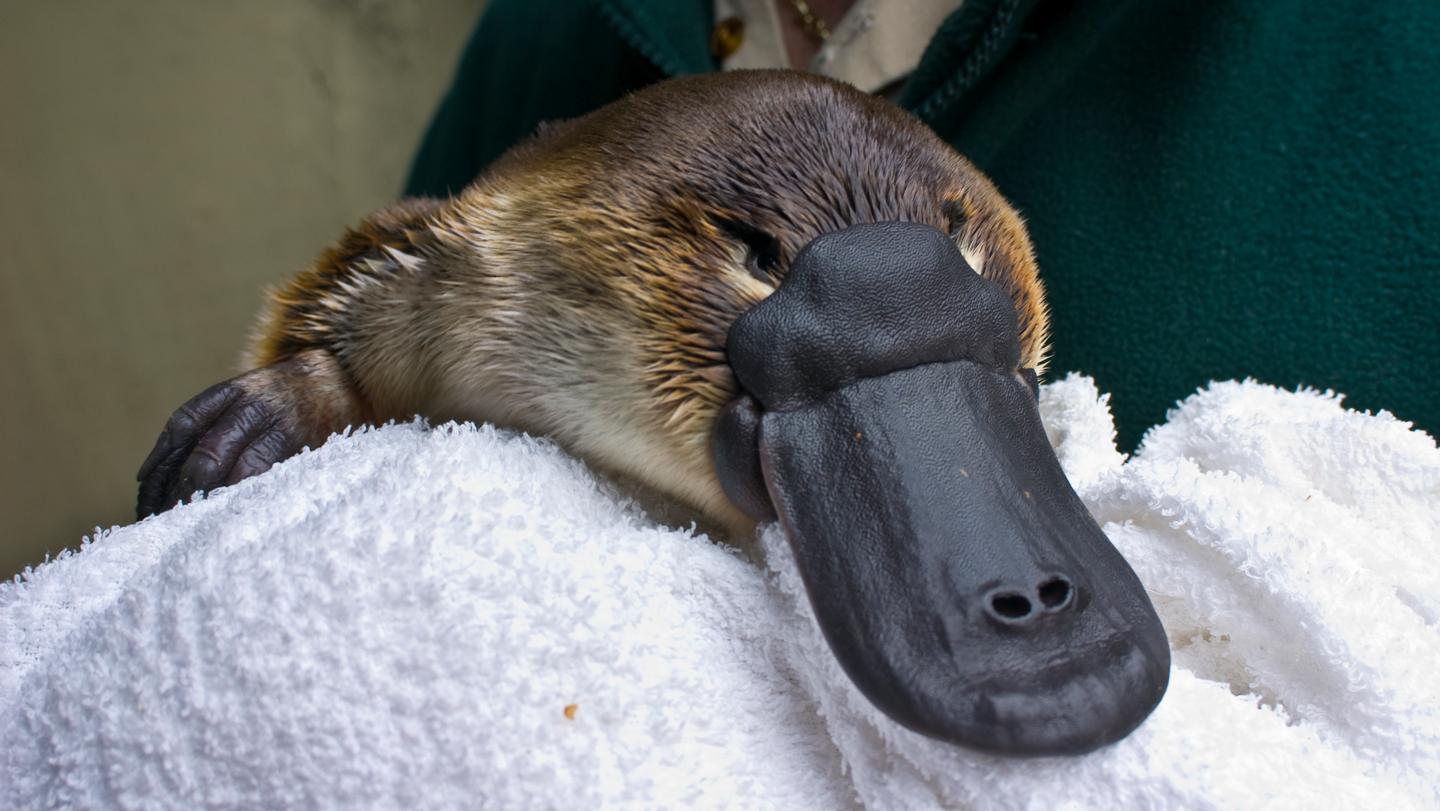
Platypuses share a surprising fur feature with birds Skip to content Subscribe today Every print subscription comes with full digital access Subscribe Now Menu All Topics Health Humans Anthropology Health & Medicine Archaeology Psychology View All Life Animals Plants Ecosystems Paleontology Neuroscience Genetics Microbes View All Earth Agriculture Climate Oceans Environment View All Physics Materials Science Quantum Physics Particle Physics View All Space Astronomy Planetary Science Cosmology View All Magazine Menu All Stories Multimedia Reviews Puzzles Collections Educator Portal Century of Science Unsung characters Coronavirus Outbreak Newsletters Investors Lab About SN Explores Our Store SIGN IN Donate Home INDEPENDENT JOURNALISM SINCE 1921 SIGN IN Search Open search Close search Home INDEPENDENT JOURNALISM SINCE 1921 All Topics Earth Agriculture Climate Oceans Environment Humans Anthropology Health & Medicine Archaeology Psychology Life Animals Plants Ecosystems Paleontology Neuroscience Genetics Microbes Physics Materials Science Quantum Physics Particle Physics Space Astronomy Planetary Science Cosmology Tech Computing Artificial Intelligence Chemistry Math Science & Society All Topics Health Humans Humans Anthropology Health & Medicine Archaeology Psychology Recent posts in Humans Archaeology A new study questions when people first reached South America By Tom Metcalfe3 hours ago Health & Medicine Are pig organs the future of transplantation? By Meghan RosenMarch 17, 2026 Health & Medicine Smartwatch data can be used to assess early diabetes risk By Elie DolginMarch 16, 2026 Life Life Animals Plants Ecosystems Paleontology Neuroscience Genetics Microbes Recent posts in Life Microbes How warming is shifting microbial worlds By Erin Garcia de Jesús8 hours ago Animals Sharks are ingesting drugs in the Bahamas By Joshua Rapp LearnMarch 18, 2026 Animals Platypus fur has a surprising feature seen only in bird feathers By Jude ColemanMarch 17, 2026 Earth Earth Agriculture Climate Oceans Environment Recent posts in Earth Earth Earth’s continental plates were moving 3.48 billion years ago By Douglas Fox3 hours ago Microbes How warming is shifting microbial worlds By Erin Garcia de Jesús8 hours ago Earth To make a ‘Snowball Earth,’ sci-fi moves fast. Geology is far slower By Carolyn GramlingMarch 18, 2026 Physics Physics Materials Science Quantum Physics Particle Physics Recent posts in Physics Physics A static electricity mystery comes to the surface By Emily ConoverMarch 18, 2026 Plants Tree tops sparkle with electricity during thunderstorms By Lily BurtonMarch 10, 2026 Physics When the pressure’s off, this superconductor appears to break records By Emily ConoverMarch 9, 2026 Space Space Astronomy Planetary Science Cosmology Recent posts in Space Space One possible recipe for life on Titan is a bust By Tina Hesman SaeyMarch 11, 2026 Astronomy A strange ‘chirp’ in a brilliant stellar blast points to a magnetar By Jay BennettMarch 11, 2026 Planetary Science NASA’s DART spacecraft changed an asteroid’s orbit around the sun By Lisa GrossmanMarch 6, 2026 News Animals Platypus fur has a surprising feature seen only in bird feathers Pigment structures in the fur are hollow like those in birds — a first for mammals Platypuses (Ornithorhynchus anatinus) are endemic to the fresh waters of Australia. The mammals have hollow pigment-containing structures called melanosomes. They might be related to the mammal’s aquatic lifestyle, researchers speculate. Jason Edwards/The Image Bank/Getty Images By Jude Coleman March 17, 2026 at 8:01 pm Share this:Share Share via email (Opens in new window) Email Share on Facebook (Opens in new window) Facebook Share on Reddit (Opens in new window) Reddit Share on X (Opens in new window) X Print (Opens in new window) Print Listen to this article This is a human-written story voiced by AI. Got feedback? Take our survey . (See our AI policy here .) Platypuses just got weirder. As if a mammal that lays eggs, senses electricity with its bill and fluoresces isn’t enough of a headscratcher, now it appears platypuses also share a feature with birds. Tiny pigment-filled packets in the mammals’ hair are hollow — a trait previously thought to be found only in avian feathers, researchers report March 17 in Biology Letters. Scientists have “never, ever seen anything like this before,” says biologist Jessica Dobson of Ghent University in Belgium. Sign up for our newsletter We summarize the week's scientific breakthroughs every Thursday. Dobson was comparing the pigment-filled packets, called melanosomes, inside the hair of several mammal species when her Ph.D. supervisor, Liliana D’Alba, noticed the platypus oddity. Typically, mammals’ melanosomes are solid, and those of birds can be hollow, but seeing a platypus with hollow melanosomes led Dobson to dig deeper. She next used an electron microscope to examine melanosomes from hair across the bodies of 12 platypuses. Then, she looked at melanosomes from echidnas — platypuses’ closest relatives — and from several species of marsupials, the group that includes wombats and possums. Hollow melanosomes didn’t show up in echidnas or marsupials. They also didn’t appear in any of the mammal species that Dobson had already documented for her other project. Combined with the new animals, the data represent 126 species of mammals. Dobson also extracted melanin pigments from platypus hair to compare their chemical composition with the pigments of other mammals. Although platypus melanosomes are round in shape, the melanin they contain looks more like that often found in elongated melanosomes, producing darker colors such as browns and blacks. Lighter reds and yellows are typically associated with spherical melanosomes. The round, hollow combination is also unique. In birds with hollow melanosomes, the structures are always rodlike. “It just keeps getting cooler,” Dobson says. The discovery grows even more puzzling: In birds, the hollowness of melanosomes can contribute to the iridescent sheen of feathers. But platypuses aren’t iridescent. And mammals that are iridescent — such as certain rodents — have solid melanosomes. It’s unclear how platypuses benefit from having hollow melanosomes at all, the researchers say. Golden jackals (Canis aureus) have solid, elongated melanosomes. Elongated melanosomes are associated with the pigment eumelanin, which yields darker colors like browns and blacks. The magnification is 600 times the original size. Jessica Leigh Dobson/Ghent University Platypuses have hollow, spherical melanosomes. Spherical melanosomes are usually associated with the pigment pheomelanin, which yields lighter colors like red and yellows, but platypuses’ melanin looks more like the darker eumelanin. The magnification is 1,200 times the original size. Jessica Leigh Dobson/Ghent University “My gut feeling is it’s
Platypus fur has a surprising feature seen only in bird feathers