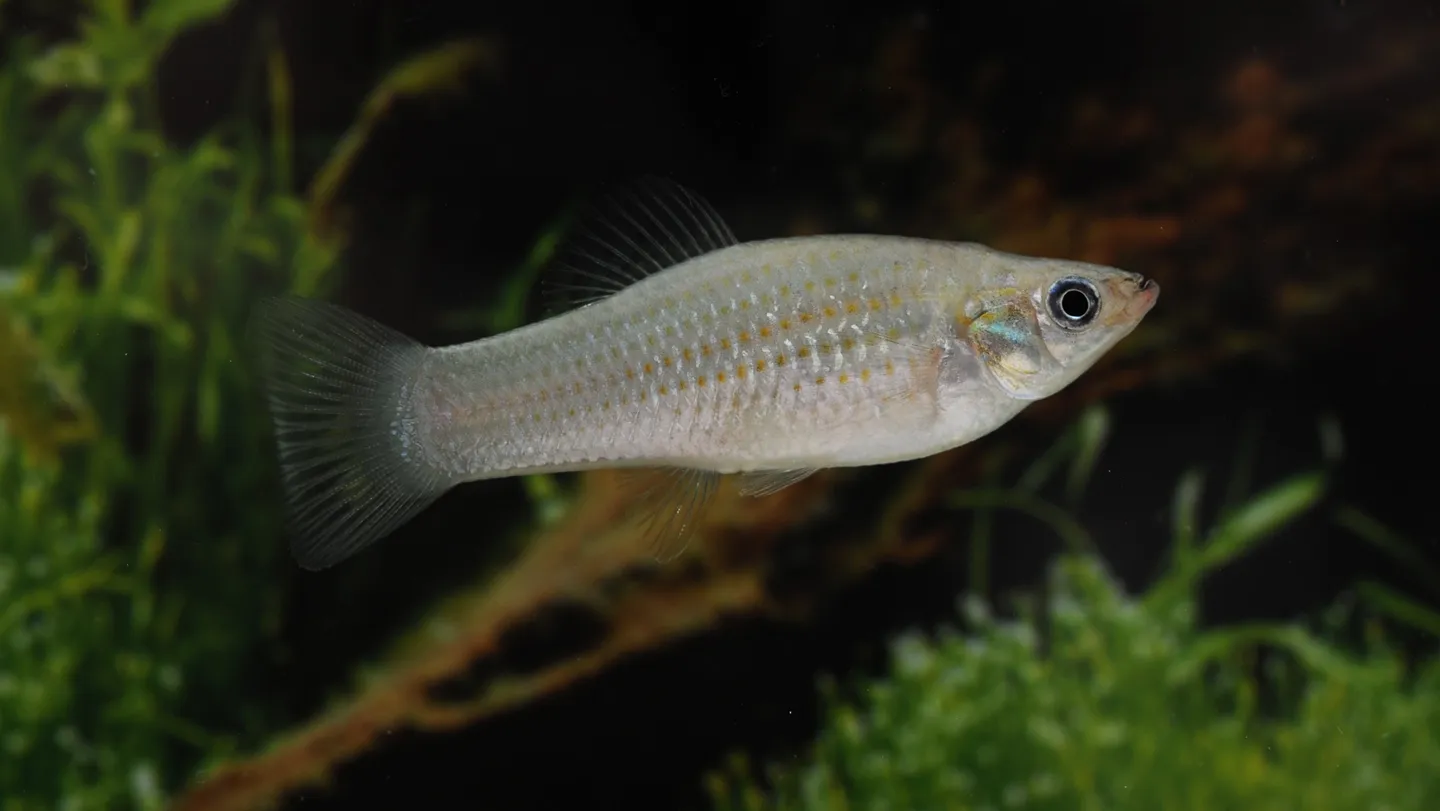
The Amazon molly — a sex-skipping fish — hacks evolution Skip to content Subscribe today Every print subscription comes with full digital access Subscribe Now Menu All Topics Health Humans Anthropology Health & Medicine Archaeology Psychology View All Life Animals Plants Ecosystems Paleontology Neuroscience Genetics Microbes View All Earth Agriculture Climate Oceans Environment View All Physics Materials Science Quantum Physics Particle Physics View All Space Astronomy Planetary Science Cosmology View All Magazine Menu All Stories Multimedia Reviews Puzzles Collections Educator Portal Century of Science Unsung characters Coronavirus Outbreak Newsletters Investors Lab About SN Explores Our Store SIGN IN Donate Home INDEPENDENT JOURNALISM SINCE 1921 SIGN IN Search Open search Close search Home INDEPENDENT JOURNALISM SINCE 1921 All Topics Earth Agriculture Climate Oceans Environment Humans Anthropology Health & Medicine Archaeology Psychology Life Animals Plants Ecosystems Paleontology Neuroscience Genetics Microbes Physics Materials Science Quantum Physics Particle Physics Space Astronomy Planetary Science Cosmology Tech Computing Artificial Intelligence Chemistry Math Science & Society All Topics Health Humans Humans Anthropology Health & Medicine Archaeology Psychology Recent posts in Humans Health & Medicine ‘Smart underwear’ measures how often humans fart By Tina Hesman SaeyMarch 10, 2026 Health & Medicine How does early pregnancy lower breast cancer risk? Odd cells could offer clues By Meghan RosenMarch 9, 2026 Neuroscience The right sounds may turn sleep into a problem-solving tool By Bethany BrookshireMarch 3, 2026 Life Life Animals Plants Ecosystems Paleontology Neuroscience Genetics Microbes Recent posts in Life Genetics The Amazon molly — a sex-skipping fish — hacks evolution By Elie Dolgin4 minutes ago Animals Submerged bumblebee queens breathe underwater By Erin Garcia de Jesús16 hours ago Plants Tree tops sparkle with electricity during thunderstorms By Lily BurtonMarch 10, 2026 Earth Earth Agriculture Climate Oceans Environment Recent posts in Earth Plants Tree tops sparkle with electricity during thunderstorms By Lily BurtonMarch 10, 2026 Climate Lakes are growing in Alaska. That’s not entirely a bad thing By Douglas FoxMarch 9, 2026 Climate Hundreds of studies have missed how much the oceans are rising By Nikk OgasaMarch 4, 2026 Physics Physics Materials Science Quantum Physics Particle Physics Recent posts in Physics Plants Tree tops sparkle with electricity during thunderstorms By Lily BurtonMarch 10, 2026 Physics When the pressure’s off, this superconductor appears to break records By Emily ConoverMarch 9, 2026 Chemistry This molecule puts a new twist on the Möbius strip By Emily ConoverMarch 5, 2026 Space Space Astronomy Planetary Science Cosmology Recent posts in Space Planetary Science NASA’s DART spacecraft changed an asteroid’s orbit around the sun By Lisa GrossmanMarch 6, 2026 Plants Chickpeas can grow in moon dirt and make seeds By Lisa GrossmanMarch 5, 2026 Planetary Science A Titan collision may link Saturn’s tilt, its moon Hyperion and its rings By Lisa GrossmanMarch 4, 2026 News Genetics The Amazon molly — a sex-skipping fish — hacks evolution The fish keeps harmful mutations at bay with a DNA repair trick The Amazon molly doesn’t reproduce sexually, but it avoids accumulating harmful mutations by shuffling its own genome around. Manfred Schartl By Elie Dolgin 4 minutes ago Share this:Share Share via email (Opens in new window) Email Share on Facebook (Opens in new window) Facebook Share on Reddit (Opens in new window) Reddit Share on X (Opens in new window) X Print (Opens in new window) Print The Amazon molly is an evolutionary enigma: an all-female fish that reproduces by cloning itself. Because it doesn’t mix its DNA with a mate’s, Darwinian logic holds that harmful mutations should pile up over time, eventually driving the species extinct. Yet the molly (Poecilia formosa) has stubbornly refused to follow that script. That seems to be because the fish’s genome repeatedly rewrites itself, researchers report March 11 in Nature. It uses a copy-and-paste DNA repair mechanism called gene conversion, in which small stretches of genetic code are copied from one chromosome to another. These genetic handoffs can erase unfavorable mutations and sometimes spread beneficial ones, allowing natural selection to keep operating. Sign up for our newsletter We summarize the week's scientific breakthroughs every Thursday. “It’s pushing back against this accumulation of mutations,” says Wes Warren, a comparative genomicist at the University of Missouri in Columbia. The results provide the first evidence that gene conversion can counteract mutation buildup in an asexual vertebrate — that is, one whose offspring are essentially genetic copies, or clones, of the parent. “If these patterns hold broadly, it suggests we may need to treat DNA repair and gene conversion as part of the toolkit shaping the evolutionary fate of clonal species,” says Waldir Miron Berbel-Filho, an evolutionary biologist at the University of West Florida in Pensacola who was not involved in the research but wrote an accompanying commentary in the same issue of Nature. The patterns of genetic handoffs in the fish echo those in simpler organisms like certain mites.Manfred Schartl The Amazon molly has thrived for more than 100,000 years in warm rivers and lagoons along the Mexico-Texas border. Although still reliant on males from closely related species to trigger egg development, females propagate themselves clonally with little sign of genetic decay. Warren and his colleagues first published a version of the fish’s genome in 2018. But, owing to limitations of DNA sequencing technologies available at the time, they could not say how exactly the genome kept its mutations in check. The team needed newer sequencing tools that could cleanly separate the fish’s paired chromosomes, each of which came from a different ancestral species that mated long ago to produce the first of this unusual hybrid lineage. Such tools make it possible to study mutations in much finer detail and to pinpoint hidden processes shaping the genome over time. Once that technology became available, Warren and his colleagues took another look. Now, the researchers could clearly see telltale patterns of gene conversion occurring across the genome, echoing results others have seen in simpler organisms, including rotifers, water fleas, mites and flatworms. By generating new pockets of genetic variation, the process “gives natural selection something to act on,” says computational biologist Edward Ricemeyer from the Ludwig Maximilian University of Munich. Gene conversion doesn’t just scrub away harmful mutations and fix advantageous variants, though. The chromosome changeovers also appear to iron out genetic mismatches that can giv
The Amazon molly — a sex-skipping fish — hacks evolution