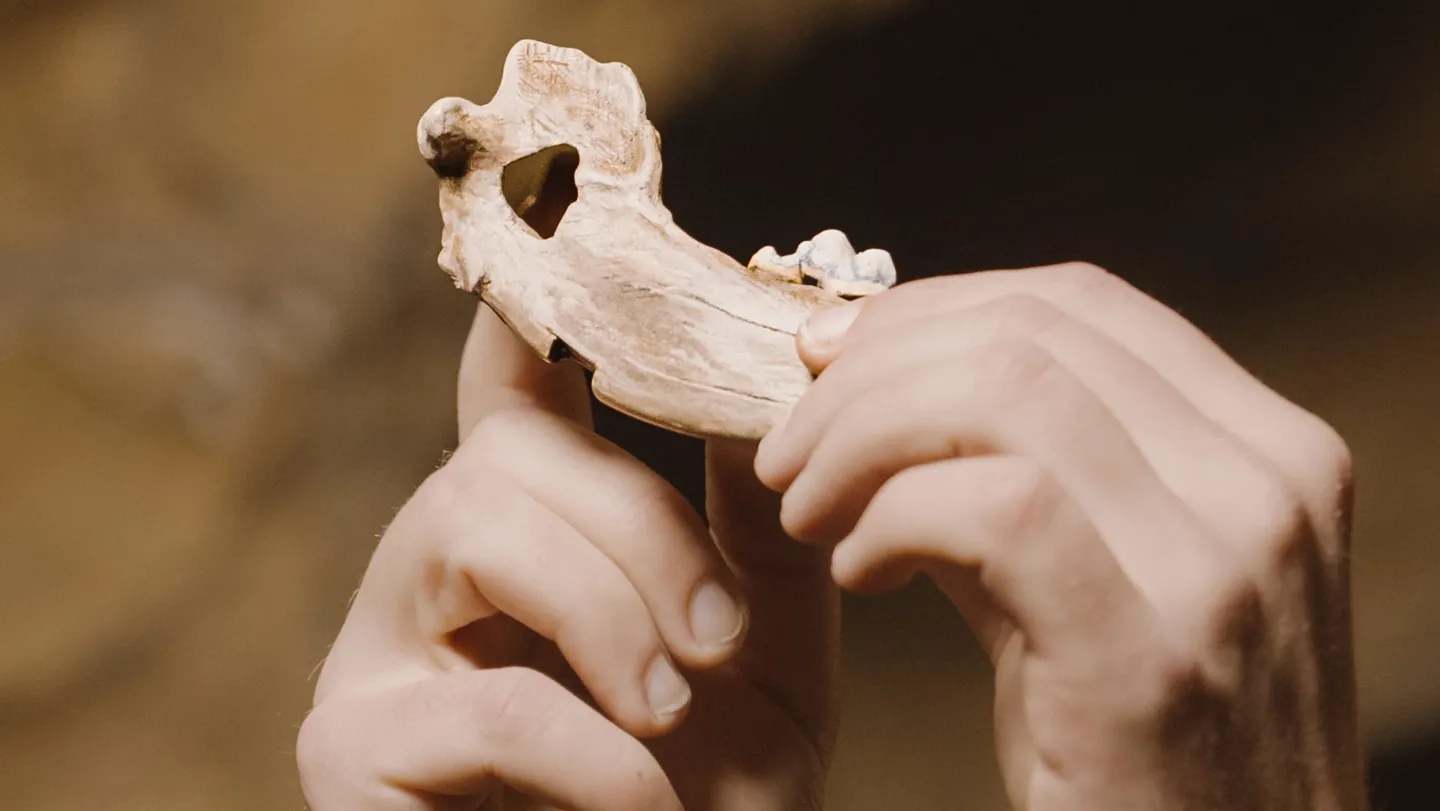
When were dogs domesticated? The oldest known dog DNA offers clues Skip to content Subscribe today Every print subscription comes with full digital access Subscribe Now Menu All Topics Health Humans Anthropology Health & Medicine Archaeology Psychology View All Life Animals Plants Ecosystems Paleontology Neuroscience Genetics Microbes View All Earth Agriculture Climate Oceans Environment View All Physics Materials Science Quantum Physics Particle Physics View All Space Astronomy Planetary Science Cosmology View All Magazine Menu All Stories Multimedia Reviews Puzzles Collections Educator Portal Century of Science Unsung characters Coronavirus Outbreak Newsletters Investors Lab About SN Explores Our Store SIGN IN Donate Home INDEPENDENT JOURNALISM SINCE 1921 SIGN IN Search Open search Close search Home INDEPENDENT JOURNALISM SINCE 1921 All Topics Earth Agriculture Climate Oceans Environment Humans Anthropology Health & Medicine Archaeology Psychology Life Animals Plants Ecosystems Paleontology Neuroscience Genetics Microbes Physics Materials Science Quantum Physics Particle Physics Space Astronomy Planetary Science Cosmology Tech Computing Artificial Intelligence Chemistry Math Science & Society All Topics Health Humans Humans Anthropology Health & Medicine Archaeology Psychology Recent posts in Humans Animals When were dogs domesticated? The oldest known dog DNA offers clues By Tom Metcalfe7 hours ago Archaeology Neandertals made antibacterial ointment, but may not have known it By Martin J. KernanMarch 24, 2026 Health & Medicine Amid vaccine policy whiplash, here’s how a pediatrician talks to families By Aimee CunninghamMarch 20, 2026 Life Life Animals Plants Ecosystems Paleontology Neuroscience Genetics Microbes Recent posts in Life Animals When were dogs domesticated? The oldest known dog DNA offers clues By Tom Metcalfe7 hours ago Neuroscience Clumps of mouse brain cells can learn to play a virtual game By Andrea Lius10 hours ago Physics These insects fly with their legs. Physics explains how By Emily ConoverMarch 24, 2026 Earth Earth Agriculture Climate Oceans Environment Recent posts in Earth Space How realistic is Project Hail Mary? By Tina Hesman Saey and Carolyn GramlingMarch 20, 2026 Earth Earth’s continental plates were moving 3.48 billion years ago By Douglas FoxMarch 19, 2026 Microbes How warming is shifting microbial worlds By Erin Garcia de JesúsMarch 19, 2026 Physics Physics Materials Science Quantum Physics Particle Physics Recent posts in Physics Particle Physics Antimatter traveled by truck for the first time By Emily ConoverMarch 24, 2026 Physics These insects fly with their legs. Physics explains how By Emily ConoverMarch 24, 2026 Animals Female giant rainforest mantises grow up to strike harder than males By Susan MiliusMarch 23, 2026 Space Space Astronomy Planetary Science Cosmology Recent posts in Space Space NASA races to have the first moon base and nuclear-propulsion spacecraft By Nikk Ogasa and Lisa Grossman6 hours ago Planetary Science A private moon lander challenges ideas about lunar volcanism By Lisa Grossman9 hours ago Space In a rare event, the moon got a massive new crater By Lisa GrossmanMarch 23, 2026 News Animals When were dogs domesticated? The oldest known dog DNA offers clues Genetic studies show a stable dog population throughout Late Upper Paleolithic Eurasia Ancient DNA from this dog’s jawbone, found at Gough’s Cave in what’s now the west of England, helped researchers push back the date of dog domestication. Tom Anders & Longleat By Tom Metcalfe 7 hours ago Share this:Share Share via email (Opens in new window) Email Share on Facebook (Opens in new window) Facebook Share on Reddit (Opens in new window) Reddit Share on X (Opens in new window) X Print (Opens in new window) Print Dogs in Europe had been domesticated from wild wolves by at least 14,200 years ago, two new genetic studies suggest. Both studies, published March 25 in Nature, use ancient DNA recovered from fossil dog bones to revise the early history of domestic dogs (Canis familiaris). The research pushes back the confirmed date for dogs’ separation from wolves (Canis lupus) by more than 3,000 years. The two studies are a “significant advance” in understanding how dogs evolved from wolves, says evolutionary biologist Beth Shapiro of the University of California, Santa Cruz, who was not involved in the new work. And they show that living dogs are the result of more than 15,000 years of migrations, interbreeding and human influence, she says. Sign up for our newsletter We summarize the week's scientific breakthroughs every Thursday. Dogs were the first animals domesticated by humans — tens of thousands of years before horses, sheep or cattle — and share many of their genes with wolves. Scientists think dogs evolved from wolves, mainly to be less aggressive to humans, but the exact date of their genetic divergence is not known. A 2015 study estimated that dogs split from wolves between 27,000 and 40,000 years ago, based on fossilized wolf bones from Siberia that were radiocarbon-dated to about 35,000 years ago. And, until now, the oldest confirmed dog remains with preserved DNA, found in northwest Russia, date to about 10,900 years ago. The researchers in the latest studies examined ancient DNA extracted from over 200 sets of dog and wolf remains at dozens of prehistoric sites across Europe, Southwest Asia and the Iranian plateau. The oldest dog in both studies is from the Kesserloch archaeological site in Switzerland, radiocarbon-dated to 14,200 years ago, during the Paleolithic period. Genetic analyses show that the Kesserloch dog shared ancestry with Paleolithic dogs from other regions, suggesting dogs were widely established and genetically distinct from wolves by then. The second study examined dog genomes from ancient sites in what are now Turkey, England and Serbia, and shows that genetically stable dog populations had spread across this region by about 14,300 years ago. Fossilized dog bones from many of the sites also showed consistent genetic signatures, suggesting they belonged to established, stable populations. The researchers don’t know if any of these ancient dogs were technically pets of the prehistoric humans who lived at the sites or if the dogs had been just “hanging around the human campsites,” says geneticist Anders Bergström from the University of East Anglia in Norwich, England. But there is archaeological evidence that at least one of the dogs had been well cared for by humans, which suggests dogs were well-tempered members of their groups, he says. This artist’s reconstruction shows what an early human group with dogs might have looked like at a prehistoric site in what is now Turkey.Kathryn Killackey Both studies’ findings reinforce the idea that dogs had evolved from wolves between 27,000 and 40,000 years ago. But both refute the idea that dogs in Europe descended independently
When were dogs domesticated? The oldest known dog DNA offers clues