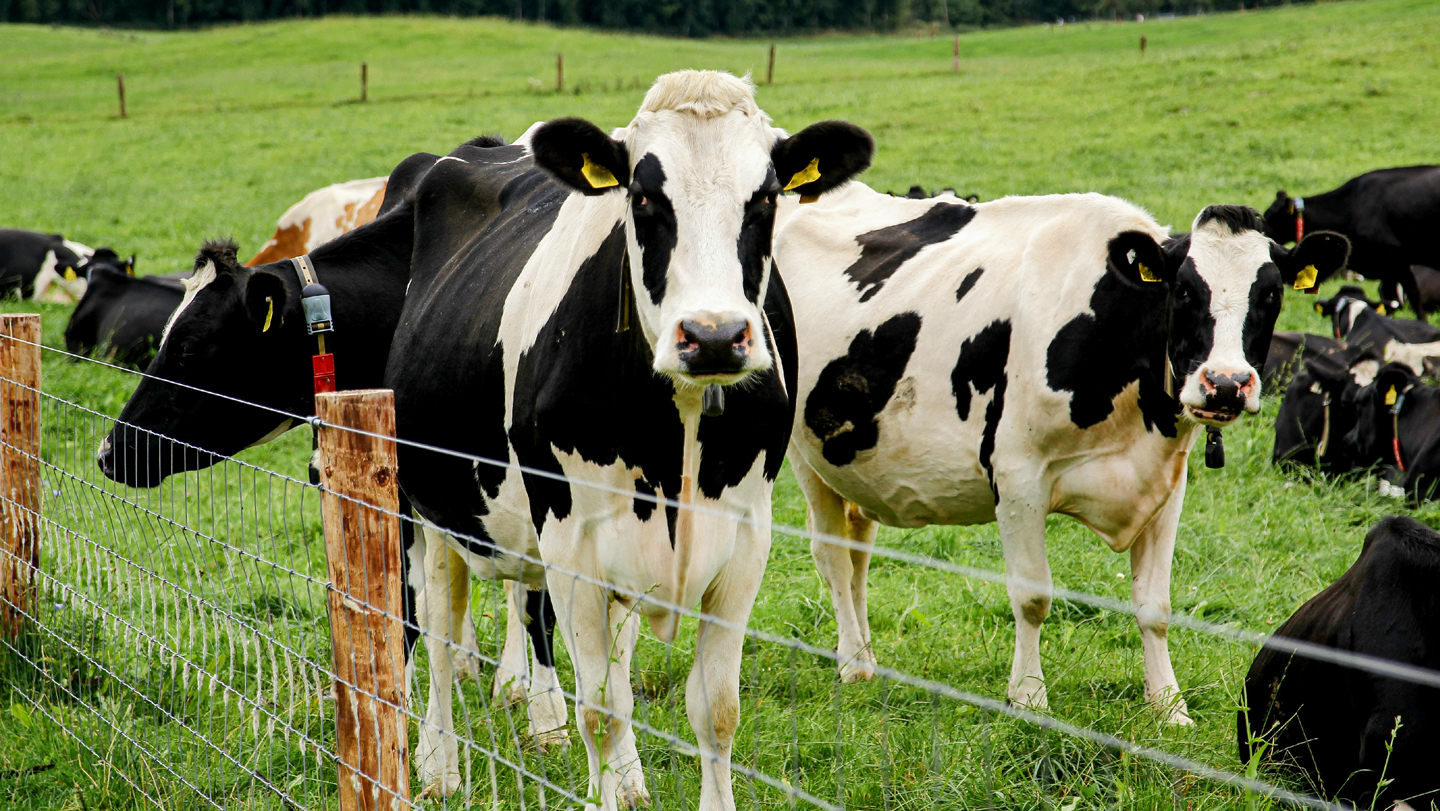
New mutations help the H5N1 bird flu virus infect cows but not people Skip to content Subscribe today Every print subscription comes with full digital access Subscribe Now Menu All Topics Health Humans Anthropology Health & Medicine Archaeology Psychology View All Life Animals Plants Ecosystems Paleontology Neuroscience Genetics Microbes View All Earth Agriculture Climate Oceans Environment View All Physics Materials Science Quantum Physics Particle Physics View All Space Astronomy Planetary Science Cosmology View All Magazine Menu All Stories Multimedia Reviews Puzzles Collections Educator Portal Century of Science Unsung characters Coronavirus Outbreak Newsletters Investors Lab About SN Explores Our Store SIGN IN Donate Home INDEPENDENT JOURNALISM SINCE 1921 SIGN IN Search Open search Close search Home INDEPENDENT JOURNALISM SINCE 1921 All Topics Earth Agriculture Climate Oceans Environment Humans Anthropology Health & Medicine Archaeology Psychology Life Animals Plants Ecosystems Paleontology Neuroscience Genetics Microbes Physics Materials Science Quantum Physics Particle Physics Space Astronomy Planetary Science Cosmology Tech Computing Artificial Intelligence Chemistry Math Science & Society All Topics Health Humans Humans Anthropology Health & Medicine Archaeology Psychology Recent posts in Humans Health & Medicine Fluoride in U.S. drinking water does not reduce IQ, a new study finds By Elie Dolgin21 hours ago Life Talking dogs and chatty cats could one day ‘speak’ in our language By Laura Sanders24 hours ago Science & Society Snippets of hair may expose chronic stress in war refugees By Sujata GuptaApril 6, 2026 Life Life Animals Plants Ecosystems Paleontology Neuroscience Genetics Microbes Recent posts in Life Life Smithsonian secrets most likely to blow your mind By Meghan Rosen and Stephen Voss2 hours ago Life Talking dogs and chatty cats could one day ‘speak’ in our language By Laura Sanders24 hours ago Animals For gray whales, San Francisco Bay is becoming a deadly pit stop By Gennaro TommaApril 13, 2026 Earth Earth Agriculture Climate Oceans Environment Recent posts in Earth Animals For gray whales, San Francisco Bay is becoming a deadly pit stop By Gennaro TommaApril 13, 2026 Climate Emperor penguins are marching toward extinction. Antarctica fur seals too By Carolyn GramlingApril 9, 2026 Environment Hawaii is turning ocean plastic into roads to fight pollution By Sara NovakApril 8, 2026 Physics Physics Materials Science Quantum Physics Particle Physics Recent posts in Physics Cosmology Exploding black holes could explain an antimatter mystery By Emily ConoverApril 10, 2026 Quantum Physics Just 10,000 quantum bits might crack internet encryption schemes By Emily ConoverApril 1, 2026 Quantum Physics Quantum physics can confirm where someone is located By Emily ConoverMarch 30, 2026 Space Space Astronomy Planetary Science Cosmology Recent posts in Space Space Artemis II ends its historic lunar journey By Lisa GrossmanApril 10, 2026 Cosmology Exploding black holes could explain an antimatter mystery By Emily ConoverApril 10, 2026 Space Even before splashdown, Artemis II is delivering a scientific treasure trove By Lisa GrossmanApril 8, 2026 News Health & Medicine New mutations help the H5N1 bird flu virus infect cows but not people The mutations target a specific sugar on the surface of cows’ cells H5N1 bird flu viruses have evolved to grasp a sugar found on cattle cells, but not on humans’ or birds’. That could enable the viruses to spread more easily between cattle. Kinga Krzeminska/Moment/Getty Images By Tina Hesman Saey 5 minutes ago Share this:Share Share via email (Opens in new window) Email Share on Facebook (Opens in new window) Facebook Share on Reddit (Opens in new window) Reddit Share on X (Opens in new window) X Print (Opens in new window) Print H5N1 bird flu viruses have acquired a molecular trick that makes them more easily infect mammary glands in cattle, but this adaptation does not appear to affect humans. To infect cells, influenza viruses latch on to certain sugars decorating cell surfaces. Some H5N1 viruses have picked up mutations that allow them to grab one such sugar made by cattle but not by humans or birds, researchers report April 6 at bioRxiv.org. Specifically, two mutations commonly found in H5N1 viruses infecting dairy cattle now allow the bird flu viruses to grip the sugar N-glycolylneuraminic acid, or NeuGc. Grasping this cattle sugar made it easier for H5N1 bird flu viruses to infect and grow in mammary tissue from cows, the researchers found. Sign up for our newsletter We summarize the week's scientific breakthroughs every Thursday. The sugar switch may also make it easier for H5N1 to spread from cow-to-cow through the air and might increase the risk of spillover to other farm animals, such as pigs, sheep and horses, which also make NeuGc, the researchers suggest. Humans and birds lack an enzyme that produces the sugar NeuGc. They make acetylneuraminic acid, or NeuAc, instead. The H5N1 viruses that grab onto the cattle sugar can latch on to the version found in humans and birds. But in lab tests, the virus’ ability to snag cattle’s NeuGc had either no effect or slightly hindered viral growth in human nasal cells, so the switch doesn’t appear to have increased the risk of H5N1 bird flu spreading easily between people. Before this, scientists were aware of just one other example of a flu virus gaining the ability to grab NeuGc. In that case, a now-extinct equine influenza virus switched entirely from grasping NeuAc to using NeuGc, says Thomas Peacock, a virologist at the Pirbright Institute in England. Because it could no longer grasp NeuAc, “probably the [equine] virus would have gotten worse [at] infecting birds or humans,” he says. But the cattle-adapted H5N1 “has just learned to use the second type while quite happily using the first type just as well.” That dual-sugar use might be bad news for people. Though the cattle-adapted viruses don’t have a growth advantage in human cells, because they have both human and cattle sugars to latch on to, bird flu viruses can grow much faster and reach higher levels in cattle, increasing the number of viruses in milk and perhaps in the air, Peacock says. So, “maybe when humans are exposed to infected cattle, the doses they’re getting could be higher.” Questions or comments on this article? E-mail us at feedback@sciencenews.org | Reprints FAQ Citations J. A. Hassard et al. Bovine H5N1 influenza viruses have adapted to more efficiently use receptors abundant in cattle. bioRxiv.org. Posted April 6, 2026. doi: 10.64898/2026.04.02.715584. About Tina Hesman Saey E-mail X Tina Hesman Saey is the senior staff writer and reports on molecular biology. She has a Ph.D. in molecular genetics from Washington University in St. Louis and a master’s degree in science journalism from Boston University. We are at a critical time and
New mutations help the H5N1 bird flu virus infect cows but not people