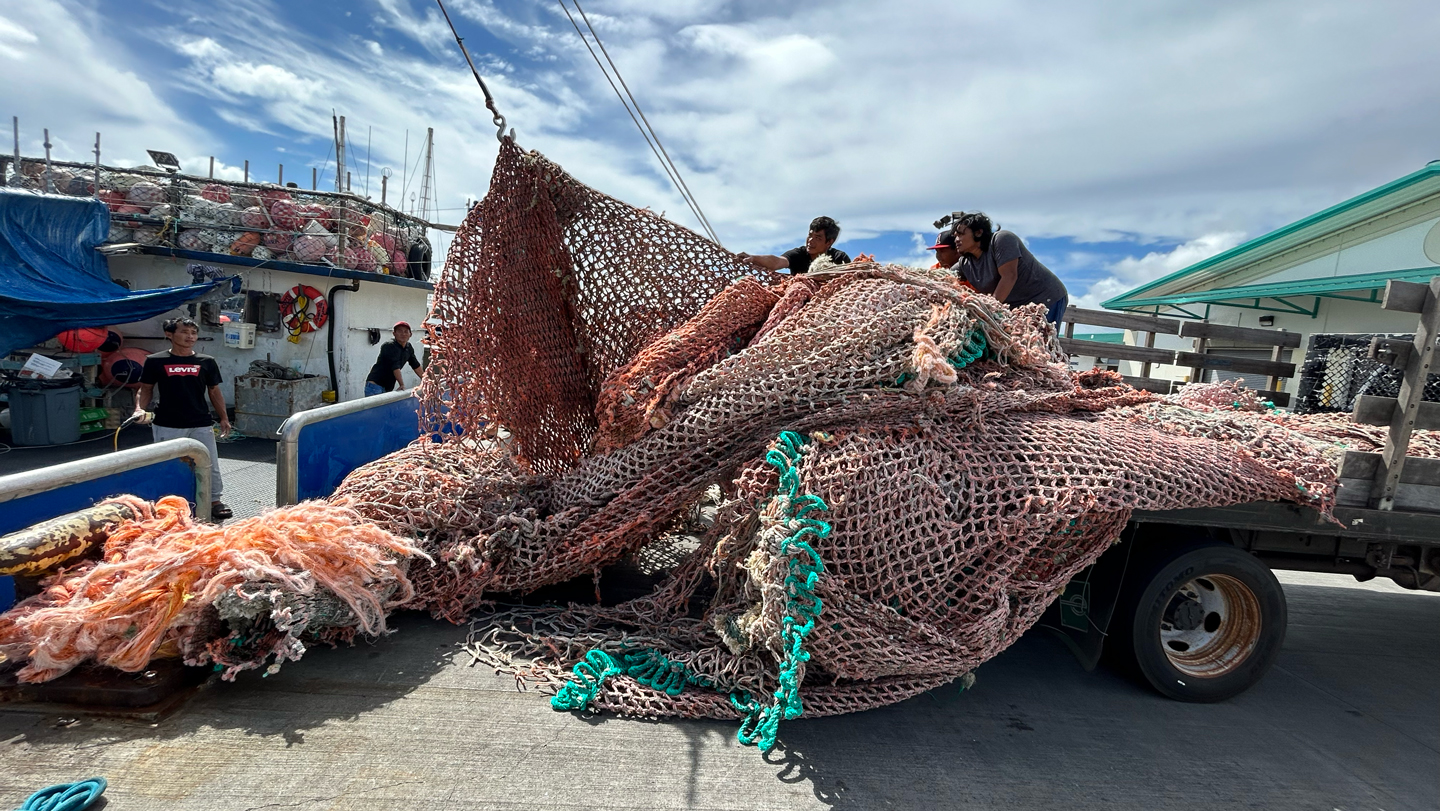
Hawaii is turning ocean plastic into roads to fight pollution Skip to content Subscribe today Every print subscription comes with full digital access Subscribe Now Menu All Topics Health Humans Anthropology Health & Medicine Archaeology Psychology View All Life Animals Plants Ecosystems Paleontology Neuroscience Genetics Microbes View All Earth Agriculture Climate Oceans Environment View All Physics Materials Science Quantum Physics Particle Physics View All Space Astronomy Planetary Science Cosmology View All Magazine Menu All Stories Multimedia Reviews Puzzles Collections Educator Portal Century of Science Unsung characters Coronavirus Outbreak Newsletters Investors Lab About SN Explores Our Store SIGN IN Donate Home INDEPENDENT JOURNALISM SINCE 1921 SIGN IN Search Open search Close search Home INDEPENDENT JOURNALISM SINCE 1921 All Topics Earth Agriculture Climate Oceans Environment Humans Anthropology Health & Medicine Archaeology Psychology Life Animals Plants Ecosystems Paleontology Neuroscience Genetics Microbes Physics Materials Science Quantum Physics Particle Physics Space Astronomy Planetary Science Cosmology Tech Computing Artificial Intelligence Chemistry Math Science & Society All Topics Health Humans Humans Anthropology Health & Medicine Archaeology Psychology Recent posts in Humans Science & Society Snippets of hair may expose chronic stress in war refugees By Sujata GuptaApril 6, 2026 Health & Medicine When our minds wander to the body, it may affect mental health By Diana KwonApril 3, 2026 Health & Medicine Supreme Court ruling on ‘conversion therapy’ puts medical talk in the hot seat By Aimee CunninghamApril 3, 2026 Life Life Animals Plants Ecosystems Paleontology Neuroscience Genetics Microbes Recent posts in Life Animals For gray whales, San Francisco Bay is becoming a deadly pit stop By Gennaro Tomma50 minutes ago Neuroscience Seeing and imagining activate some of the same brain cells By Diana KwonApril 9, 2026 Paleontology Mummified reptile hints at the origins of how we breathe By Carolyn GramlingApril 8, 2026 Earth Earth Agriculture Climate Oceans Environment Recent posts in Earth Animals For gray whales, San Francisco Bay is becoming a deadly pit stop By Gennaro Tomma50 minutes ago Climate Emperor penguins are marching toward extinction. Antarctica fur seals too By Carolyn GramlingApril 9, 2026 Environment Hawaii is turning ocean plastic into roads to fight pollution By Sara NovakApril 8, 2026 Physics Physics Materials Science Quantum Physics Particle Physics Recent posts in Physics Cosmology Exploding black holes could explain an antimatter mystery By Emily ConoverApril 10, 2026 Quantum Physics Just 10,000 quantum bits might crack internet encryption schemes By Emily ConoverApril 1, 2026 Quantum Physics Quantum physics can confirm where someone is located By Emily ConoverMarch 30, 2026 Space Space Astronomy Planetary Science Cosmology Recent posts in Space Space Artemis II ends its historic lunar journey By Lisa GrossmanApril 10, 2026 Cosmology Exploding black holes could explain an antimatter mystery By Emily ConoverApril 10, 2026 Space Even before splashdown, Artemis II is delivering a scientific treasure trove By Lisa GrossmanApril 8, 2026 News Environment Hawaii is turning ocean plastic into roads to fight pollution An island program recycles discarded fishing gear and plastic debris into durable pavement About 90 tons of plastic, including old fishing nets, have been hauled from the waters and beaches of Hawaii. Some of it has been turned into pellets to be added to asphalt and tested in paved road sections on Oahu. Courtesy of the Center for Marine Debris Research By Sara Novak April 8, 2026 at 1:00 pm Share this:Share Share via email (Opens in new window) Email Share on Facebook (Opens in new window) Facebook Share on Reddit (Opens in new window) Reddit Share on X (Opens in new window) X Print (Opens in new window) Print Listen to this article This is a human-written story voiced by AI. Got feedback? Take our survey . (See our AI policy here .) In Hawaii, researchers are literally paving the roads with good intentions. They have come up with an innovative method for putting the island’s plastic pollution to work, covering its roads with asphalt mixed with plastic waste and old fishing nets. While plastic paving initiatives are happening in places like Missouri and Texas, the project in Hawaii is the first to use marine debris. It is designed to solve the islands’ unique exposure to discarded fishing gear, tourist waste and the Great Pacific Garbage Patch, which engulfs the island chain every few years. To date, 90 metric tons of plastic trash have been removed from the Pacific Ocean, and more than a metric ton of fishing nets alone have been paved into Hawaiian roads. Sign up for our newsletter We summarize the week's scientific breakthroughs every Thursday. One key question is whether wear and tear on that pavement might shed microplastics into the environment. Preliminary results show that the asphalt remains largely intact, researchers reported March 22 at the American Chemical Society meeting in Atlanta. “We’re extremely concerned about the shedding of plastics or other chemicals into the environment,” because this can expose humans and animals to toxic plastic additives, leading to hormone disruption, chronic inflammation and reproductive problems, says chemist Jennifer Lynch. She heads the Center for Marine Debris Research at Hawaii Pacific University in Honolulu. The center runs the Nets-to-Roads program in which marine biologist Mafalda de Freitas and colleagues collect and sort marine debris and plastic gathered from beaches, picking out waste made with a durable plastic called polyethylene found in milk jugs, yogurt containers and fishing nets. The waste and nets are sent to the U.S. mainland, where they are shredded and ground, then returned to an Oahu-based pavement production facility, where they are mixed with other ingredients to make asphalt. The hot mix is loaded onto trucks and used to pave a length of road on Ewa Beach on the southwestern side of the island, Lynch says. In the first phase of the research in 2022, three experimental pavement strips were laid: A section with a traditional asphalt mixture and a rubber called styrene-butadiene-styrene, which adds durability and flexibility to the mixture; another with the ground marine waste and the rubber; and a third with the waste and asphalt without the rubber. A crew works on paving a section of road along Ewa Beach to test different plastic-asphalt mixtures in an attempt to recycle waste collected around the Hawaiian Islands.Courtesy of the Center for Marine Debris Research Eleven months later, researchers collected road samples to test for microplastic leaching. “We want to empirically test for [leaching] before this would ever be scaled up,” Lynch says. The team used a variety of methods to simulate how micro
Hawaii is turning ocean plastic into roads to fight pollution